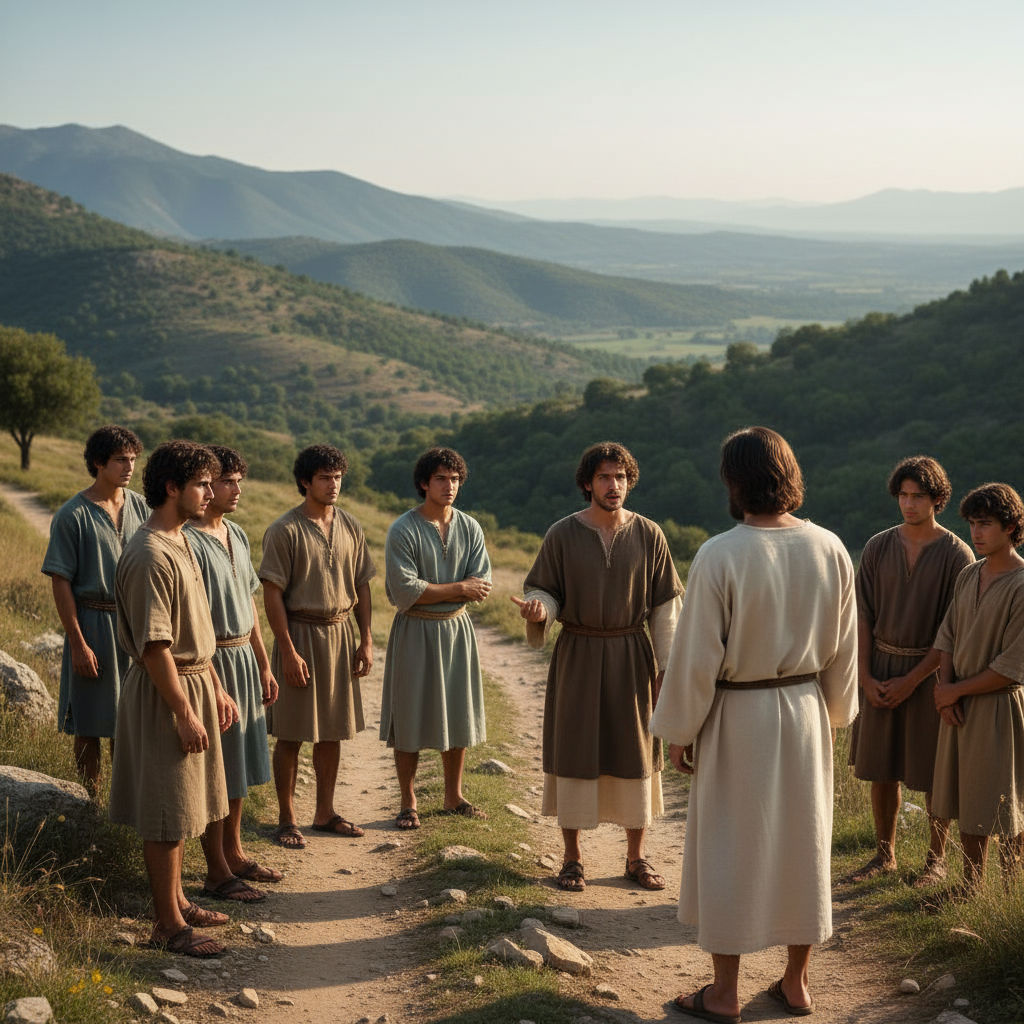

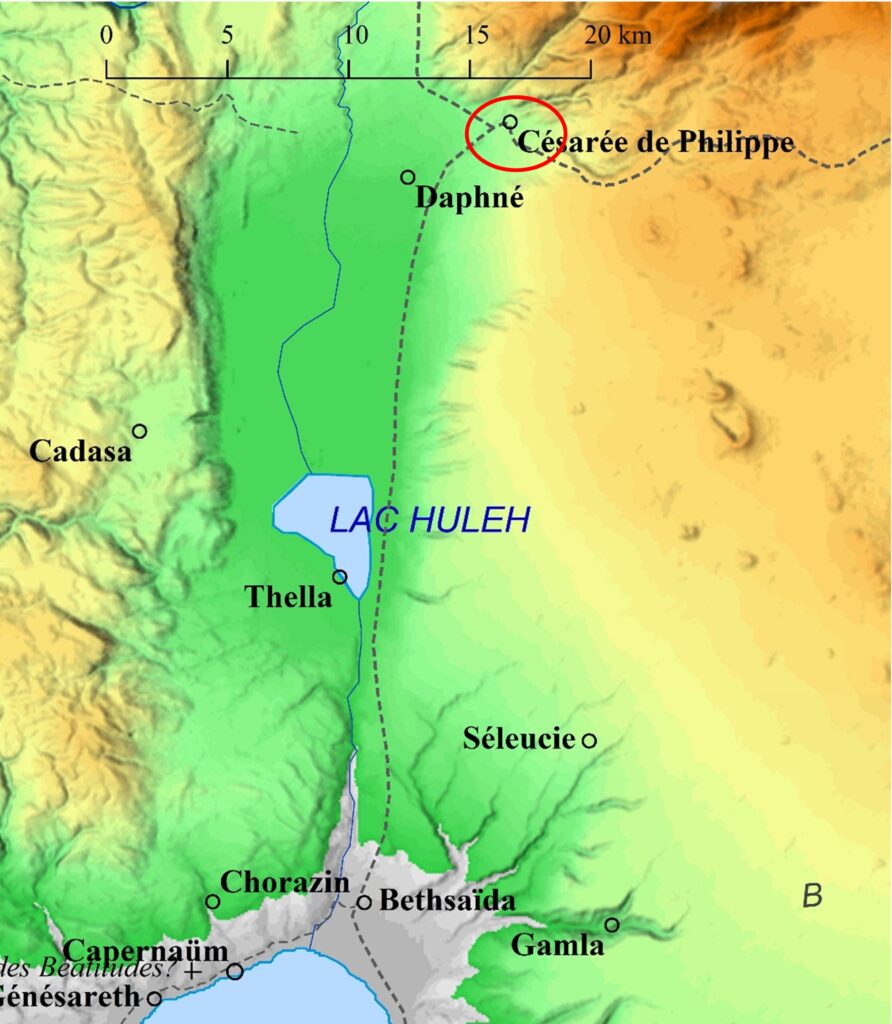
According to our conclusions, we are still in the region of Caesarea Philippi. The Messiah Jesus takes this quiet moment to instruct his disciples. Indeed, there is no crowd, and these words are spoken in the intimate setting of the group.
We are six months before the arrest and the crucifixion. It is essential to inform the apostles in advance of these events, which will be extremely disturbing for them.
It is clear that the twelve apostles are present, but the term disciple could include other people. The journey began by boat (PER185), which significantly limits the number of participants.
This is the first occasion on which the Messiah Jesus refers to his imminent death, and Peter’s reaction can be understood without difficulty given his deep attachment to the Master.
The Messiah Jesus knew that his death and his sufferings were imminent, and he was not a victim of them; he knew and controlled the events. He also announced that he would rise again on the third day. Thus, six months earlier, the apostles were informed of the events to come in April AD 33.
Peter’s reaction, although understandable, seems too human in the context of this teaching. Peter speaks to the Master in private and declares that this cannot happen. According to Matthew 16.22 and Mark 8.32, he rebukes his Lord. It is important to note that Peter works with Mark on the writing of the second Gospel, which lends accuracy to the words chosen. The man, filled with the Spirit of God, who had previously declared: “You are the Christ, the Son of the living God,” now opposes the very one to whom he had addressed those words.
The Jewish people expected a liberating Messiah who would drive the occupiers out of Israel. We are therefore very far from that outlook, and the announcement of his death clearly shows that the Messiah Jesus did not have the goal of accomplishing that act.
It is evident that this announcement has particular importance, because among the disciples and probably the apostles, the idea of a messianic political deliverance was present (Luke 24.21).
Although Peter spoke discreetly, the is addressed to all the apostles.
In addressing the group, the Messiah Jesus is well aware of shattering a nationalist dream. But it is essential that they understand the purpose of the Messiah Jesus’ coming.
In the discourse that follows, Jesus speaks of what is essential and what is secondary. He stresses that the kingdom of God must be the main objective. It is important to keep the right priorities.