
Mark is the only one to mention this deliverance performed by the Messiah Jesus. It appears to be the reason for this journey. This healing differs from the others, because whereas the Messiah Jesus usually commands the healing and it happens immediately, this time a detailed staging accompanies the act. This is probably why Mark 8.22-26 highlights this unusual healing. But let us go back over the text in detail.
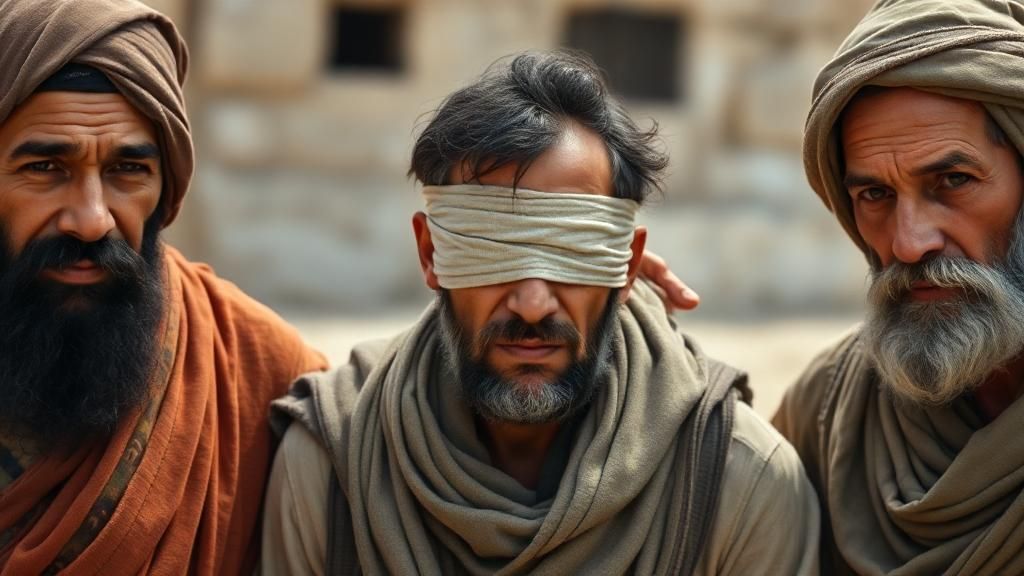
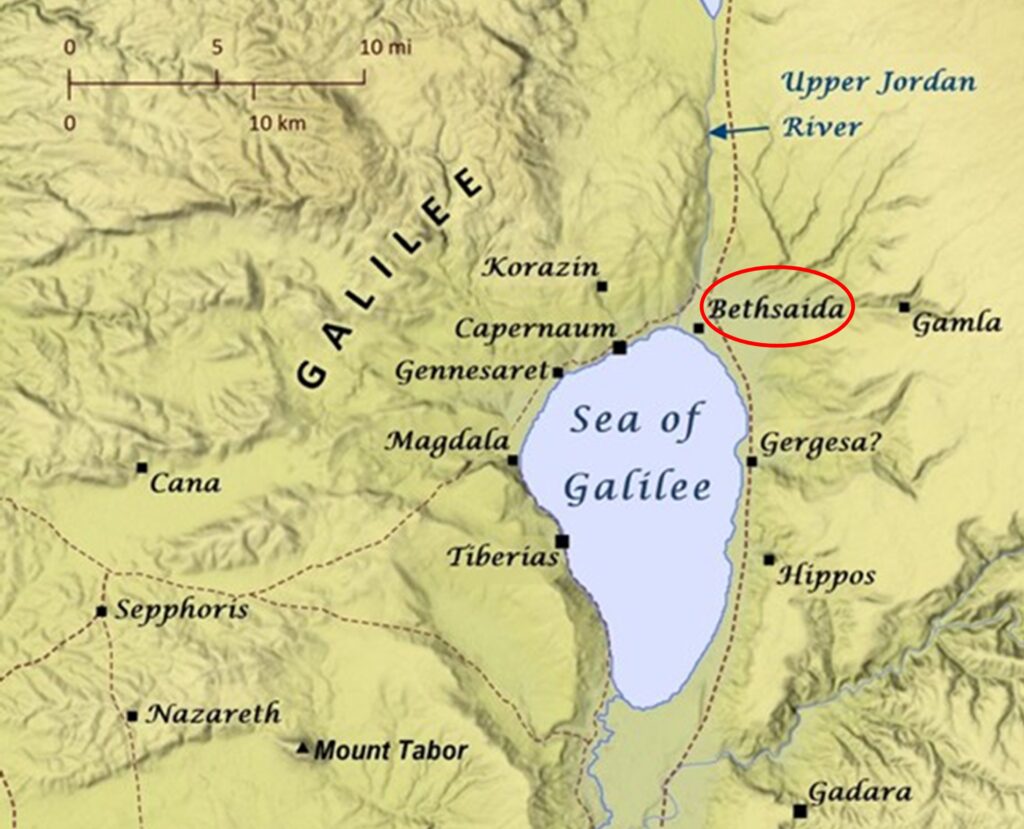
Mark 8.22-26 relates the healing of the blind man of , a unique miracle in which the Messiah Jesus intervenes in two stages. Here is the account:
1- The blind man is brought to the Messiah Jesus by people who beg him to touch him. So far, we see nothing unusual.
2- Jesus takes him by the hand and leads him out of the village, which is unusual. Healings are almost always public; we find three exceptions in Mark 5.35-43, Mark 7.31-37
3- He puts on his eyes and lays hands on him, then asks whether he sees anything. We find this principle three times: the blind man of (Mark 8.22-26), the man born blind (John 9.1-7) and the deaf-mute (Mark 7.31-37). The two miracles recorded here by Mark are not repeated in the other Gospels.
4- The man answers that he sees people, but like trees walking, which indicates blurred vision. This fact is unique.
5- The Messiah Jesus lays hands on him again, and this time the man sees clearly. It is the only miracle performed by the Messiah Jesus in two stages.
6- The Messiah Jesus tells him not to return to the village, which could symbolize a call to inner transformation.
This miracle is interesting because it shows a gradual healing, unlike the other miracles of the Messiah Jesus, which are often instantaneous.
It seems obvious to us that this procedure has a reason, for it is hard to imagine the Messiah Jesus encountering difficulties in reaching his goal, the healing of this man. Nothing in this deliverance unfolds as usual.
How can we understand and explain what appears in this miracle as a difficulty encountered by the Messiah Jesus?
Some see a spiritual : faith and understanding can develop in several stages.
Sight was a often used to denote understanding. This miracle describes the disciples' correct but incomplete understanding.
We note that the Messiah Jesus asks the blind man whether he sees (Mark 8.23), which implies that he knew this miracle would take place in two stages.
We can establish a relationship between the events that occurred in the boat during the journey (PER186) and this healing. There is therefore, in our view, a message for his apostles about their understanding of spiritual things. By the grace of God, they come to understand partially, and an even greater grace will be needed for them to understand perfectly.