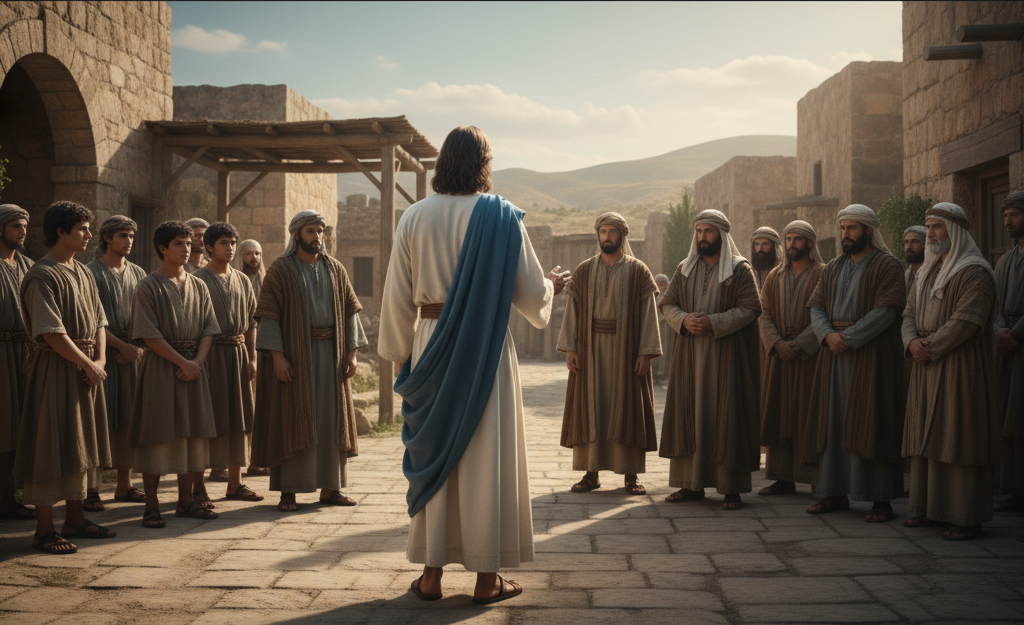


The accounts of Matthew and Mark explicitly relate the accusations made by Jesus the Messiah against the scribes and who were present.
These men seemed to have come from Jerusalem to assess the influence of Jesus the Messiah on the people. The ministry of Jesus the Messiah was causing concern because of its unforeseen expansion. The Synoptic Gospels, and John above all, indicate that the were watching Jesus the Messiah in order to prepare a joint opposition with the and the Herodians.
Jesus the Messiah appears here in a direct manner, for he sets out the facts without embellishment. This bluntness is due to the consequences of these incorrect interpretations of the law for the people.
It is essential that the Master recall the reality and the fundamental principles of the law. But let us go back over these two passages.
The passages of Matthew 15.1-9 and Mark 7.1-13 are two parallel accounts that relate a confrontation between Jesus the Messiah and the over Jewish traditions, in particular the ritual washing of hands before meals. Here is a detailed explanation and comparison of the two texts:
Analysis of Matthew 15.1-9
In this passage, and scribes from Jerusalem question Jesus the Messiah about his disciples’ failure to observe the tradition of washing hands. Jesus answers them by denouncing their hypocrisy and showing how their human traditions sometimes contradict the commandments of God. He takes the example of the commandment to honor one’s father and mother, which some evade by declaring their possessions “corban” (devoted to God), which exempts them from supporting their parents. He quotes Isaiah 29.13 to stress that these religious leaders honor God with their lips but that their heart is far from Him.
Analysis of Mark 7.1-13
The passage of Mark follows a similar structure but gives additional details about Pharisaic practices and the tradition of the elders. It insists more on the rites of purification and describes various customs, such as the washing of cups, pitchers and dishes. Jesus the Messiah responds in a similar way, denouncing how human tradition has diverted the commandment to honor one’s parents. He highlights the contrast between ritual observance and obedience to true divine principles.
Comparison of the two texts
Recipients and context :
Matthew is generally more oriented toward a Jewish audience, which explains the emphasis on the quotation from Isaiah and the opposition between the law of God and Pharisaic traditions.
Mark, written for a broader audience (probably non-Jews or Greeks), offers more detailed explanations of Jewish traditions.
Style and emphasis :
Matthew places greater emphasis on the hypocrisy of the and their distance from God.
Mark is more descriptive of the ritual practices and sets out the customs concerned in greater detail.
Central theme :
Both texts denounce the tendency to favor human rules at the expense of divine commandments.
They bring forward the need to seek a true relationship with God beyond outward rites.
These two passages illustrate a fundamental conflict in the ministry of Jesus: the opposition between Pharisaic law and the true spirit of the divine law. His criticism of the underscores the need for sincerity and authenticity in our relationship with God.
We observe in these accounts that Matthew is more severe and moralistic, whereas Mark is more explanatory and pedagogical. Both texts nevertheless denounce the excessive importance given to human traditions at the expense of divine commandments. We note that the authors adapt their writing to their intended audience.