
PER114

The praise of John the Baptist

Jesus pays tribute to John the Baptist in Capernaum (May–June AD31), according to Matthew 11.7-19 and Luke 7.24-35. Without seeking to recruit his disciples, he affirms John’s prophetic greatness, identifies him as the Elijah foretold by Malachi and signals the end of the old covenant. He contrasts the Kingdom of God with the kingdom built by the Pharisees according to their own rules.

8 min John the Baptist praise Jesus the Messiah prophet kingdom of heaven 7 verses 4 books

See also

Bible texts

Matthew
Matthew 11.7-19 (King James Version)

And as they departed, Jesus began to say unto the multitudes concerning John, What went ye out into the wilderness to see? A reed shaken with the wind?

But what went ye out for to see? A man clothed in soft raiment? behold, they that wear soft clothing are in kings’ houses.

But what went ye out for to see? A prophet? yea, I say unto you, and more than a prophet.

For this is he, of whom it is written, Behold, I send my messenger before thy face, which shall prepare thy way before thee.

Verily I say unto you, Among them that are born of women there hath not risen a greater than John the Baptist: notwithstanding he that is least in the kingdom of heaven is greater than he.

And from the days of John the Baptist until now the kingdom of heaven suffereth violence, and the violent take it by force.

For all the prophets and the law prophesied until John.

And if ye will receive it, this is Elias, which was for to come.

He that hath ears to hear, let him hear.

But whereunto shall I liken this generation? It is like unto children sitting in the markets, and calling unto their fellows,

And saying, We have piped unto you, and ye have not danced; we have mourned unto you, and ye have not lamented.

For John came neither eating nor drinking, and they say, He hath a devil.

The Son of man came eating and drinking, and they say, Behold a man gluttonous, and a winebibber, a friend of publicans and sinners. But wisdom is justified of her children.

Mark
Mark (King James Version) not mentioned in the book
Luke
Luke 7.24-35 (King James Version)

And when the messengers of John were departed, he began to speak unto the people concerning John, What went ye out into the wilderness for to see? A reed shaken with the wind?

But what went ye out for to see? A man clothed in soft raiment? Behold, they which are gorgeously apparelled, and live delicately, are in kings’ courts.

But what went ye out for to see? A prophet? Yea, I say unto you, and much more than a prophet.

This is he, of whom it is written, Behold, I send my messenger before thy face, which shall prepare thy way before thee.

For I say unto you, Among those that are born of women there is not a greater prophet than John the Baptist: but he that is least in the kingdom of God is greater than he.

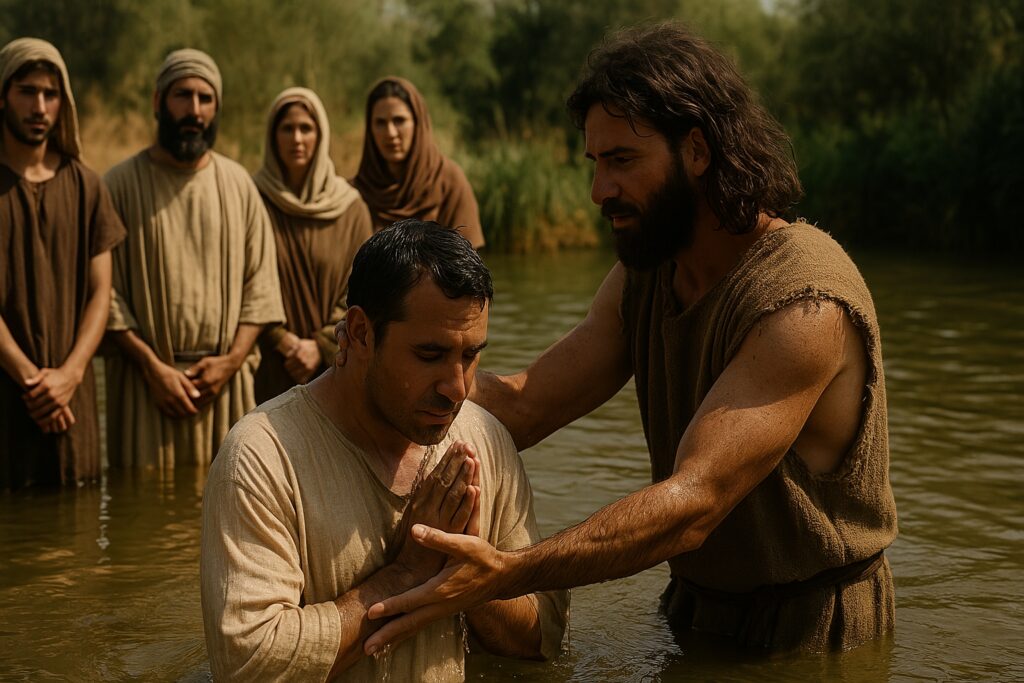
And all the people that heard him, and the publicans, justified God, being baptized with the baptism of John.

But the Pharisees and lawyers rejected the counsel of God against themselves, being not baptized of him.

And the Lord said, Whereunto then shall I liken the men of this generation? and to what are they like?

They are like unto children sitting in the marketplace, and calling one to another, and saying, We have piped unto you, and ye have not danced; we have mourned to you, and ye have not wept.

For John the Baptist came neither eating bread nor drinking wine; and ye say, He hath a devil.

The Son of man is come eating and drinking; and ye say, Behold a gluttonous man, and a winebibber, a friend of publicans and sinners!

But wisdom is justified of all her children.

John
John (King James Version) not mentioned in the book

Technical details

Bar chart for the year 31

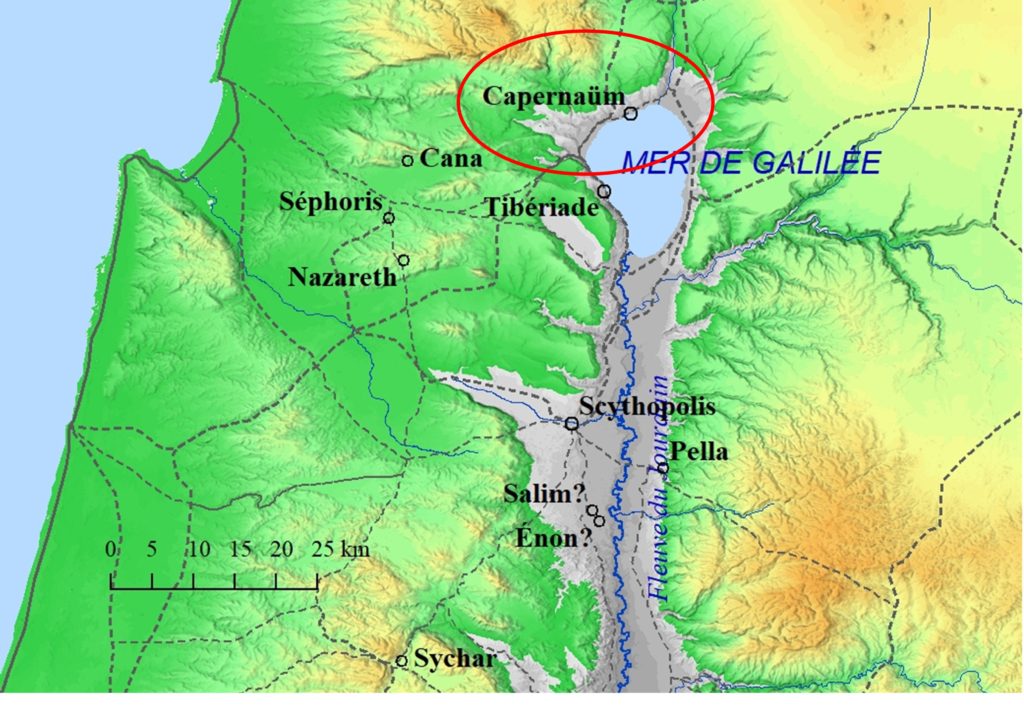
Place: Capernaum

Date: May or June AD31 (before the intense heat)

Method: We switch to Matthew

Note on the approach: Matthew and Luke recount this passage.

Capernaum

In this discourse, Jesus the Messiah takes the opportunity to pay tribute to John the Baptist.

The praise of John the Baptist

John the Baptist

Commentary

It is inappropriate to attribute to Jesus the Messiah an intention to recruit all of John the Baptist’s disciples. His aim was simply to speak the truth, without any personal motive behind this praise. Moreover, as Luke 7.24 specifies, these words were spoken after John the Baptist’s disciples had left.

Jesus the Messiah seeks only to speak the pure truth and does not try to persuade John the Baptist’s disciples through human means. The only way to prove to them that he is truly the Messiah rests on his actions in fulfilment of the prophecies (Isaiah 35.4-5). He draws on the same argument he presented to the great prophet (PER113: John the Baptist’s question).

The Master recognises the importance of John the Baptist’s ministry. This man’s qualities are evident to everyone except the religious leaders, who persist in denying them.

John the Baptist undoubtedly left his mark on his time. Nevertheless, the dominant religious class did not embrace his teachings. Jesus the Messiah highlights this ambivalent attitude, maintaining that John the Baptist’s ministry was an integral part of the divine plan, just as his own was. God had addressed the people through a great Prophet and now, once again, through Jesus the Messiah. Yet these religious leaders continued to show unbelief.

Matthew follows his custom of drawing on prophetic texts well known to his audience. In particular, he uses a quotation from Malachi 3.1. We note a difference in approach from Luke, who confines himself to reporting the facts without connecting them to the , with whom his audience is unfamiliar.

While Luke emphasises that John the Baptist is the greatest of the prophets, he supports this assertion by noting that many people, including tax collectors, were baptised by him. Matthew, for his part, quotes a somewhat enigmatic saying: ‘From the time of John the Baptist until now, the Kingdom of Heaven has been forcefully assailed, and violent people seize it.’

Matthew establishes the beginning of a period extending from John the Baptist’s birth to his own time, presumably the time when Matthew was writing. During this period, he specifies, the Kingdom of God has been subjected to violence, and malicious men (the violent) attempt to conquer it by force. The verb used here (Strong’s numbers 726 and 846) means to seize or take possession for oneself.

This passage indicates a crucial turning point, emphasising that John the Baptist is the last prophet of the old covenant (Matthew 11.13) and that after his coming a new covenant begins.

In this context, the reference may be to the religious leaders of that time, who built a kingdom based on their own criteria and rules, which they announced and proclaimed to the people. They thus sought to establish a kingdom in keeping with their own vision, but different from the one advocated by John the Baptist and Jesus the Messiah.

By declaring that John the Baptist is the Elijah who was to come (Malachi 3.1), Jesus the Messiah thus confirms the truth of his words while emphasising that the are clearly mistaken.

Jesus the Messiah clarified the situation with this tribute, emphasising the existence of two distinct kingdoms: that of the , established according to their own religious principles, and that of John the Baptist and Jesus the Messiah, the true Kingdom of Heaven. Thus, everyone is confronted with their responsibilities and can make an informed choice.

The conclusion of this message, illustrated by a about dissatisfied children quoted by both Matthew and Luke, highlights the attitude of the generation of Jesus the Messiah. These people hoped for a significant change when the Messiah arrived. John the Baptist appeared with his ascetic lifestyle, but they did not accept him. Jesus, for his part, drew close to the people, yet he too was not welcomed.

Jesus the Messiah speaks of the majority of the population, including the religious leaders, but specifies that within this generation a minority understood and were converted, choosing to follow this new Master, the Son of God.