
PER033

The first disciples

The article examines Jesus’ first meeting with his earliest disciples, reported only by John. Andrew and John recognise Jesus as the Messiah and decide to follow him. A significant moment is Jesus’ transformation of Simon Peter’s identity, marking their commitment. This account offers a unique perspective absent from the Synoptic Gospels.

3 min disciples Jesus John the Baptist 2 verses 1 book

Resources

Biblical texts

Matthew
Matthew (King James Version) not cited in the book
Mark
Mark (King James Version) not cited in the book
Luke
Luke (King James Version) not cited in the book
John
John 1.35-42 (King James Version)

Again the next day after John stood, and two of his disciples;

And looking upon Jesus as he walked, he saith, Behold the Lamb of God!

And the two disciples heard him speak, and they followed Jesus.

Then Jesus turned, and saw them following, and saith unto them, What seek ye? They said unto him, Rabbi, (which is to say, being interpreted, Master,) where dwellest thou?

He saith unto them, Come and see. They came and saw where he dwelt, and abode with him that day: for it was about the tenth hour.

One of the two which heard John speak, and followed him, was Andrew, Simon Peter’s brother.

He first findeth his own brother Simon, and saith unto him, We have found the Messias, which is, being interpreted, the Christ.

And he brought him to Jesus. And when Jesus beheld him, he said, Thou art Simon the son of Jona: thou shalt be called Cephas, which is by interpretation, A stone.

Technical details

Bar chart for the year 29

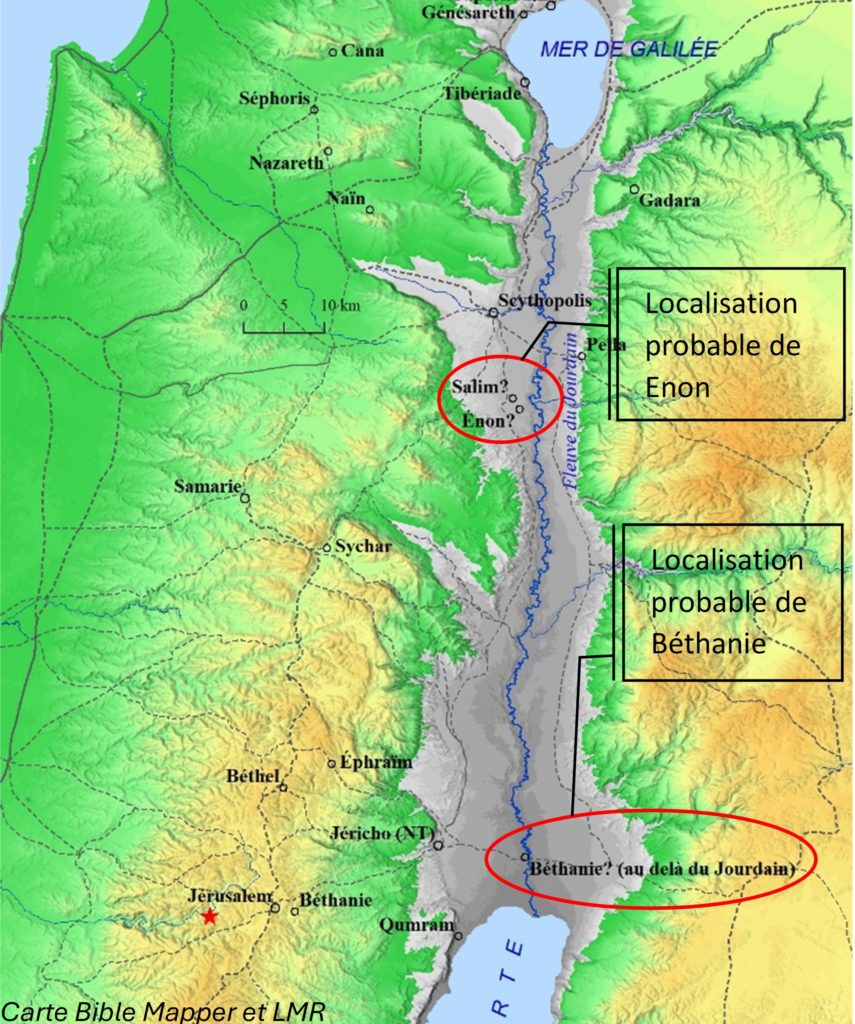
Location: Bethany (Bethabara) beyond the Jordan, north of Jerusalem

Date: The day after the baptism, 5 October 29

Method: We continue with John

Note on the method: John alone discusses these details

Aenon and Bethany map

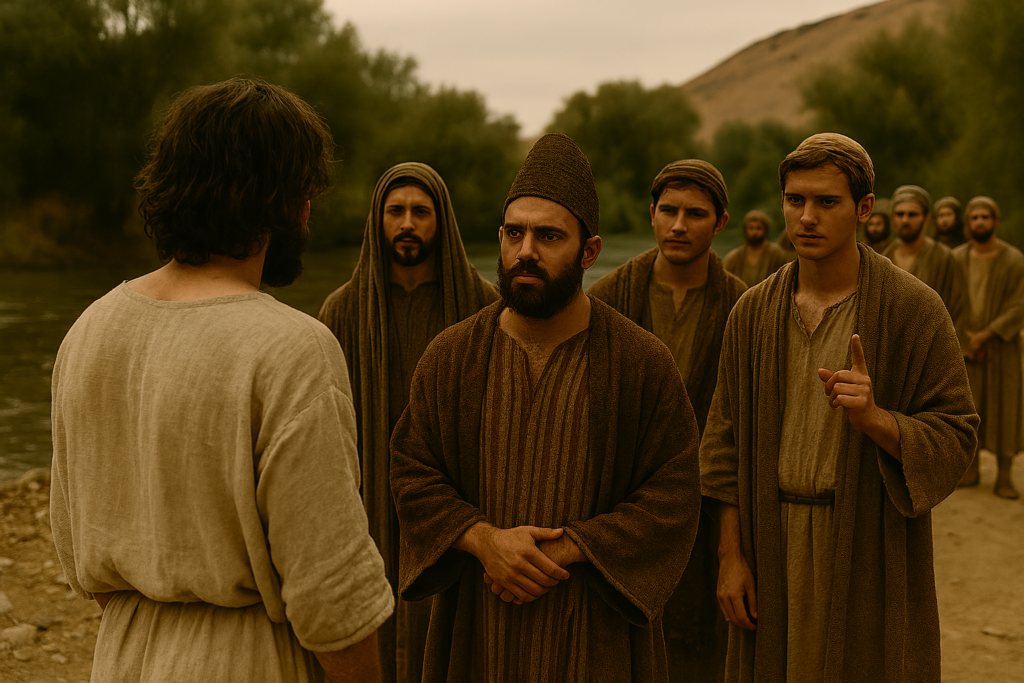
Following Jesus the Messiah’s baptism at Bethany, several disciples of John the Baptist chose to follow this new Master.

Jesus the Messiah’s first disciples

The first disciples

Comments

This entire period, described only by John, is not mentioned in the Synoptic Gospels. Jesus the Messiah’s baptism appears to have taken place privately. Indeed, the fact that John the Baptist alone recounts these events suggests there were no outside witnesses.

Andrew and another disciple, probably John, learn of this event the following day through John the Baptist’s words. They then realise that they are in the Messiah’s presence and choose to follow him. According to the apostle John, it was 4 p.m. local time. We must consider the possibility that John uses Roman timekeeping (see the appendix ANN028 : The Jewish day in Jesus’ time), in which case it would be 10 a.m. We believe John used this latter method, meaning that the tenth hour would correspond to ten in the morning (John 19.14).

Afterwards, Andrew and this same disciple, presumably John, meet Simon Peter. We assume this happens on the same day, after 10 a.m. (or 4 p.m.). Together they return to Jesus the Messiah, who gives Peter a new name.

Jesus the Messiah’s intervention in changing Peter’s name may seem surprising, so deeply does it touch his personal identity. This symbolic act marks a significant change. Aware that they stand before the Messiah announced by the prophets, the three disciples grant him every right, including the right to transform their own identity.

From then on, Andrew, the other disciple, probably John, and Peter commit themselves to following Jesus the Messiah, thus leaving their friend and teacher, John the Baptist.