
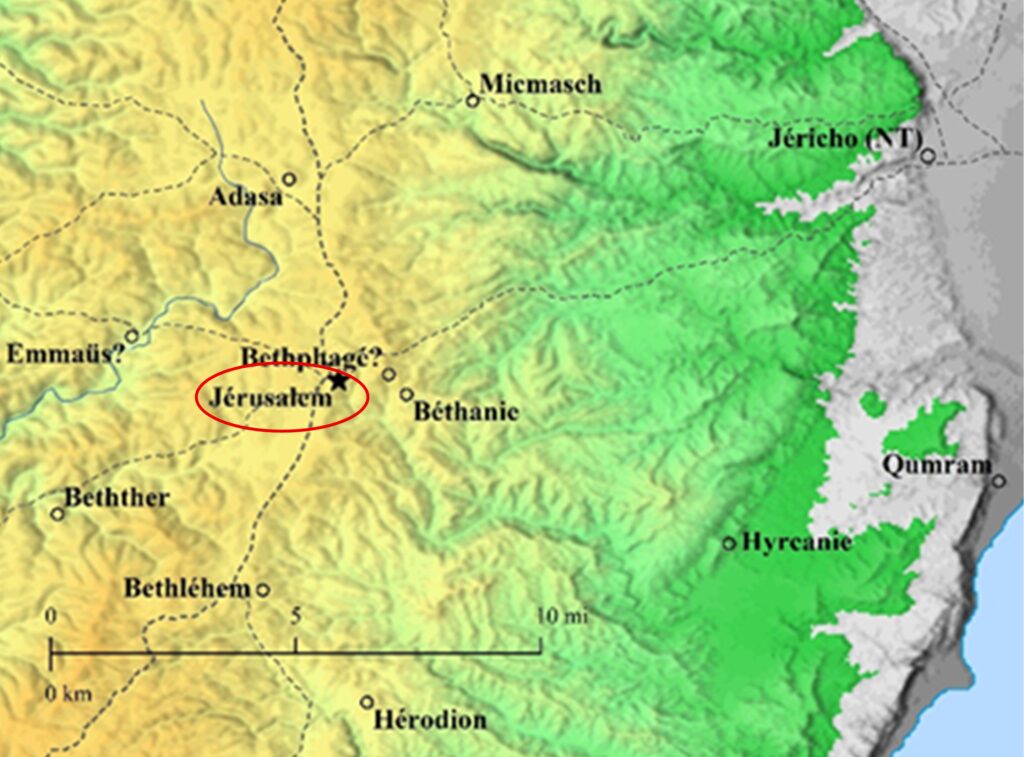

_25 From about noon until 3 p.m., there is darkness over the region of Jerusalem. Matthew 27.45 ; Mark 15.33 ; Luke 23.44.
_26 Death on the cross takes place on Friday, April 1, AD 33, around 3 p.m., according to the Gospels. It occurs before the end of this extraordinary night. The three days and three nights begin with this night, as the Jewish calendar requires.
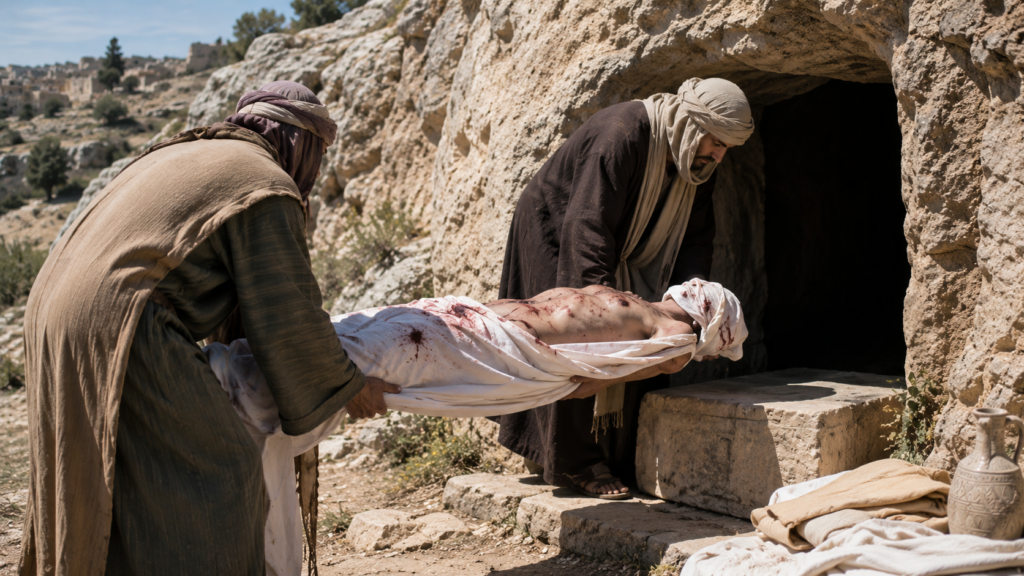
_27 The burial is thought to take place around 5 p.m., while it is still daylight. It is still Friday, which ends around 6 p.m. for the Jews. The normally begins a little earlier, around 5:50 p.m. Everything is finished by the time the begins. Matthew 27.57-61 ; Mark 15.42-47 ; Luke 23.50-56 ; John 19.31-42.
You can consult the complete chronology in the study ANN026 : The hour of the crucifixion.
Commentary:
1- Nicodemus: a sympathizer in the shadows
The Johannine account reveals a second member of the favorable to Jesus: Nicodemus. This influential had met the Master by night, about two years earlier, for a theological conversation that has remained famous in Christian tradition. The words of Jesus — “You must be born again” — had deeply marked Nicodemus, opening a reflection on spiritual regeneration as a condition for entering the Kingdom of God. (John 19.39 ; John 3.1-7)
2- A gradual conviction despite the surrounding hostility
Nicodemus recognized in Jesus a teacher come from God, attested by the signs he performed. This conviction had led him to speak up within the itself to defend Jesus' right to be heard before being condemned — a legally well-founded step, yet rejected with contempt by his peers. His failure illustrates the growing hardening of the religious authorities in the face of the messianic testimony. (John 3.2 ; John 7.50-52)
3- Preparations for a royal burial
Anticipating the fatal outcome of the trial, Nicodemus prepares what is needed for the embalming: a mixture of myrrh and aloes of about one hundred Roman pounds (more than thirty kilograms). This exceptional quantity, worthy of a royal burial, bears witness to the high esteem in which he held Jesus and gives the burial an honorific dimension unusual for a man condemned to death. (John 19.39 ; cf. 2 Chronicles 16.14)
4- Joseph of Arimathea: the new tomb and the linen shroud
Joseph of Arimathea, also a member of the and “a disciple of Jesus, but secretly, for fear of the Jews,” provides a shroud of fine white linen and offers his own new tomb, hewn out of the rock and located in a garden near Golgotha. This tomb had never yet held a body, a detail the evangelists emphasize to mark the dignity and ritual purity of the burial. (Matthew 27.59-60 ; John 19.38 ; John 19.41)
5- The burial: an act of love and prophetic fulfillment
Together, Nicodemus and Joseph personally prepare the body of Jesus, wrapping it in the linen with the spices, in accordance with Jewish burial customs. This act, performed publicly by two men of standing, requires courage and exposes those who perform it to ritual impurity as well as to the disapproval of their peers. Yet, unknowingly, they fulfill the prophetic word of Isaiah: “They made his grave with the wicked, and with the rich in his death.” (John 19.40 ; Isaiah 53.9)
6- The women as witnesses: faithfulness and plan for embalming
Some women, faithful disciples who had come from Galilee with Jesus, watch the scene from a distance. They carefully note the location of the tomb and the position of the body, for they intend to return after the to complete the embalming with their own spices. Their attentive presence prepares, within the narrative, their role as the first witnesses of the empty tomb. (Luke 23.55-56 ; Mark 15.47)
7- Transition from Friday to the Sabbath: between mourning and promise
Friday draws to a close; the begins at sunset, in keeping with the Law. Everyone returns home. For most, life goes on around the Sabbath table. But a small number, deeply bewildered, mourn their beloved Master. They do not yet know that what seems a tragic end is in fact the pivot of God's redemptive plan, announced “according to the Scriptures.” (Leviticus 23.32 ; Luke 23.48 ; 1 Corinthians 15.3-4)
8- Convergence of the testimonies: from death to hope
The convergence of the Synoptic and Johannine accounts around the burial highlights several elements: the dignity granted to the body of the Crucified One despite his condemnation, the discreet but real presence of sympathizers within the hostile institution itself, and the narrative preparation for the Easter discovery. The reader is thus led from the scandal of the cross to the dawn of the resurrection. (Matthew 27.57-61 ; Mark 15.42-47 ; Luke 23.50-56 ; John 19.38-42)