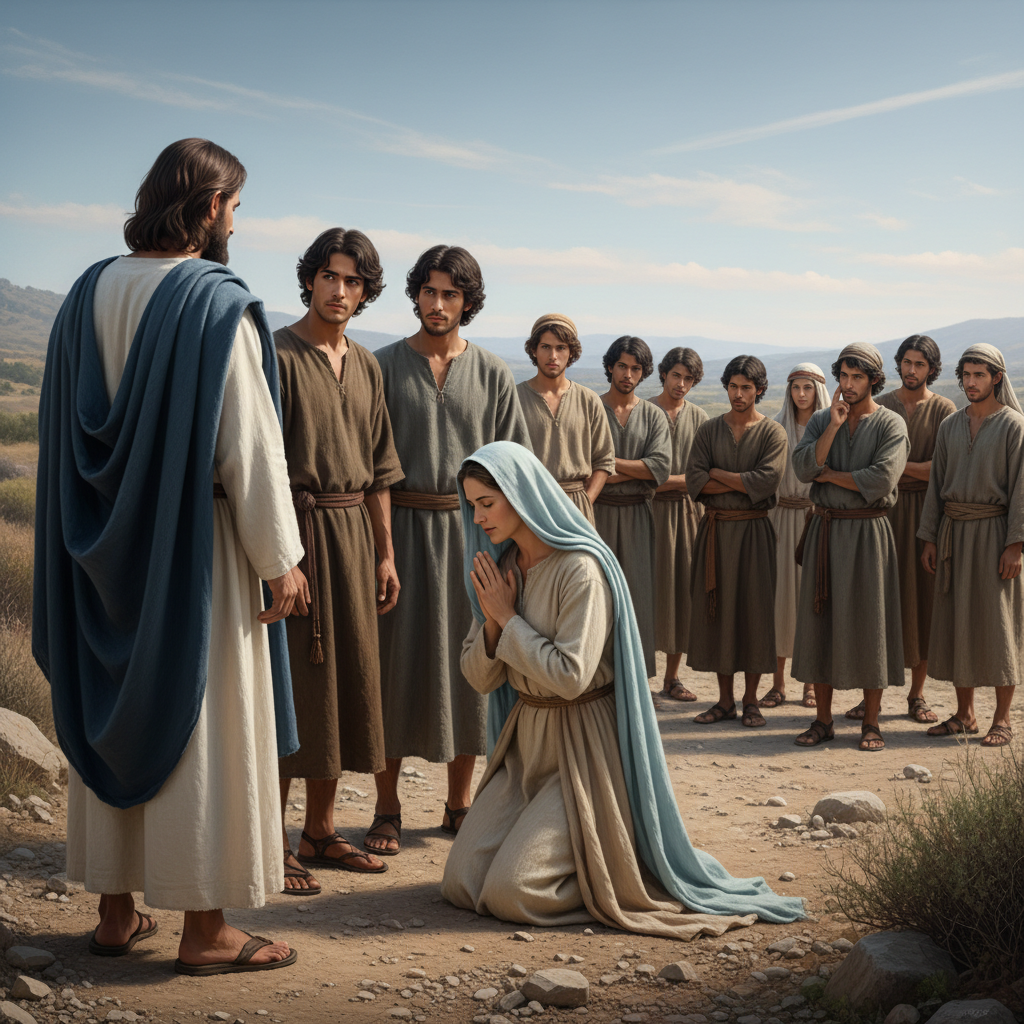

As the Messiah Jesus continues on his way to Jerusalem, two of the disciples, James and John, approach him with a bold request. In one account, they themselves take the initiative; in the other, it is their mother who comes and bows down before the Messiah Jesus to speak on their behalf. But the intention is the same: to obtain for these two brothers the places of honor beside the Messiah Jesus, one at his right hand and the other at his left, when his reign is fully manifested.
The Messiah Jesus listens to them, then answers with a gravity mixed with gentleness. He asks them whether they truly understand what they are asking. They want the glory, but they do not know the path that leads to it. The Messiah Jesus then speaks to them of the “cup” that he is to drink and the “baptism” in which he is to be immersed: powerful images that evoke his imminent suffering, his humiliation and his death. The two brothers declare that they can share this destiny, without grasping the depth of what they are saying. The Messiah Jesus answers that they will indeed drink this cup and will also go through the trial, but that the places of honor do not depend on him: they are reserved by the Father for those for whom they have been prepared.
When the ten other disciples learn of the request of James and John, they are indignant. Their anger reveals that they too are sensitive to the question of prestige and position. The Messiah Jesus then gathers them together to give them a fundamental teaching on the nature of his kingdom. He reminds them that, among the nations, the great dominate and impose their authority, seeking to be served. But he declares that, among his disciples, it must not be so.
He tells them that whoever wants to become great must become a servant, and whoever wants to be first must become the slave of all. This is not a mere moral rule, but a radical reversal of human values. To anchor this teaching, the Messiah Jesus takes his own example: he did not come to be served, but to serve, and to give his life as a ransom for the many. By these words, he reveals that true greatness comes through humility, self-giving and service, and that his own path to glory goes through the cross.