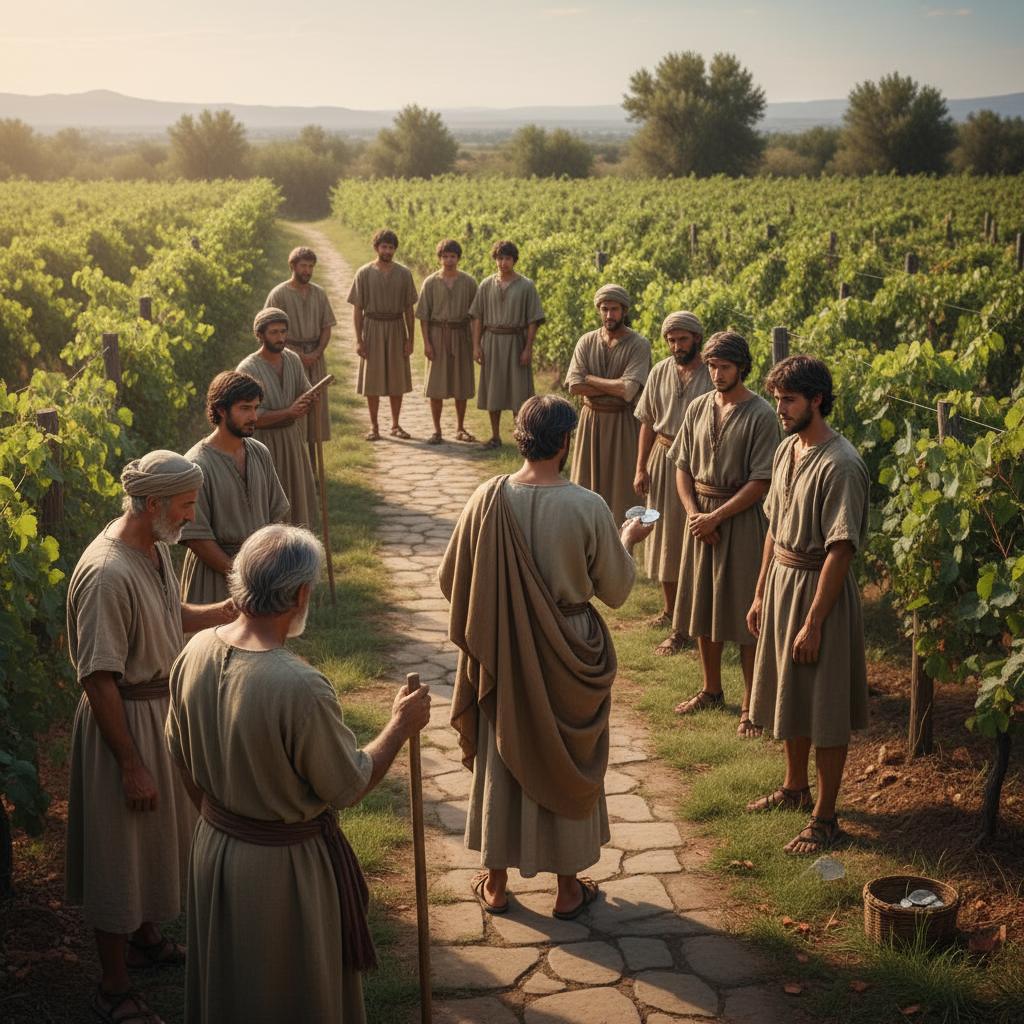

Matthew 20.1-16 presents the of the workers of the eleventh hour, a story told by the Messiah Jesus to illustrate the nature of the kingdom of heaven. In this , a householder goes out very early in the morning to hire workers to labor in his vineyard. He agrees with them on a denarius, the usual pay for a full day’s work. Then he goes out again at the third, the sixth, the ninth and finally the eleventh hour of the day, and finds other men without work. To these he promises to give whatever is right. When evening comes, the master orders his steward to pay the workers, beginning with the last hired. To everyone’s great surprise, those who worked only one hour receive a denarius, the same wage as those who worked all day.
The first hired consider themselves wronged and grumble against the master. They find it unfair that those who bore the burden of the day and the heat receive the same payment as those who worked so little. The master replies calmly: he wrongs no one, for they accepted the agreed wage. He also claims the right to do as he wishes with what is his own and to show generosity to whomever he chooses. He finally concludes with this striking saying: “The , and the .”
This highlights the divine logic of grace, different from the human logic of justice. It shows that salvation and reward in the kingdom of God do not depend on time or the amount of work, but on God’s goodness and sovereign freedom. It overturns the human hierarchy based on merit and stresses that all who answer God’s call, whether they come early or late, receive eternal life equally. It is a lesson on God’s generosity, on the gratitude man must have for the grace received, and on the humility to maintain toward those who seem to come “at the last hour.”
The