
PER096

The Sermon on the Mount (12): instruction on prayer

This article examines Jesus' teaching on prayer in the Sermon on the Mount, highlighting the call to authentic piety, far from formalism. Drawing on Matthew's and Luke's Gospels, it explains prayer's meaning and context.

5 min sermon mountain prayer Matthew Jesus 6 verses 3 books

See also

Bible texts

Matthew
Matthew 6.5-15 (King James Version)

And when thou prayest, thou shalt not be as the hypocrites are: for they love to pray standing in the and in the corners of the streets, that they may be seen of men. Verily I say unto you, They have their reward.

But thou, when thou prayest, enter into thy closet, and when thou hast shut thy door, pray to thy Father which is in secret; and thy Father which seeth in secret shall reward thee openly.

But when ye pray, use not vain repetitions, as the heathen do: for they think that they shall be heard for their much speaking.

Be not ye therefore like unto them: for your Father knoweth what things ye have need of, before ye ask him.

After this manner therefore pray ye: Our Father which art in heaven, Hallowed be thy name.

Thy kingdom come. Thy will be done in earth, as it is in heaven.

Give us this day our daily bread.

And forgive us our debts, as we forgive our debtors.

And lead us not into temptation, but deliver us from evil: For thine is the kingdom, and the power, and the glory, for ever. Amen.

For if ye forgive men their trespasses, your heavenly Father will also forgive you:

But if ye forgive not men their trespasses, neither will your Father forgive your trespasses.

Mark
Mark (King James Version) not mentioned in the book
Luke
Luke 11.1-4 (King James Version)

And it came to pass, that, as he was praying in a certain place, when he ceased, one of his disciples said unto him, Lord, teach us to pray, as John also taught his disciples.

And he said unto them, When ye pray, say, Our Father which art in heaven, Hallowed be thy name. Thy kingdom come. Thy will be done, as in heaven, so in earth.

Give us day by day our daily bread.

And forgive us our sins; for we also forgive every one that is indebted to us. And lead us not into temptation; but deliver us from evil.

John
John (King James Version) not mentioned in the book

Technical details

Bar chart for the year 31

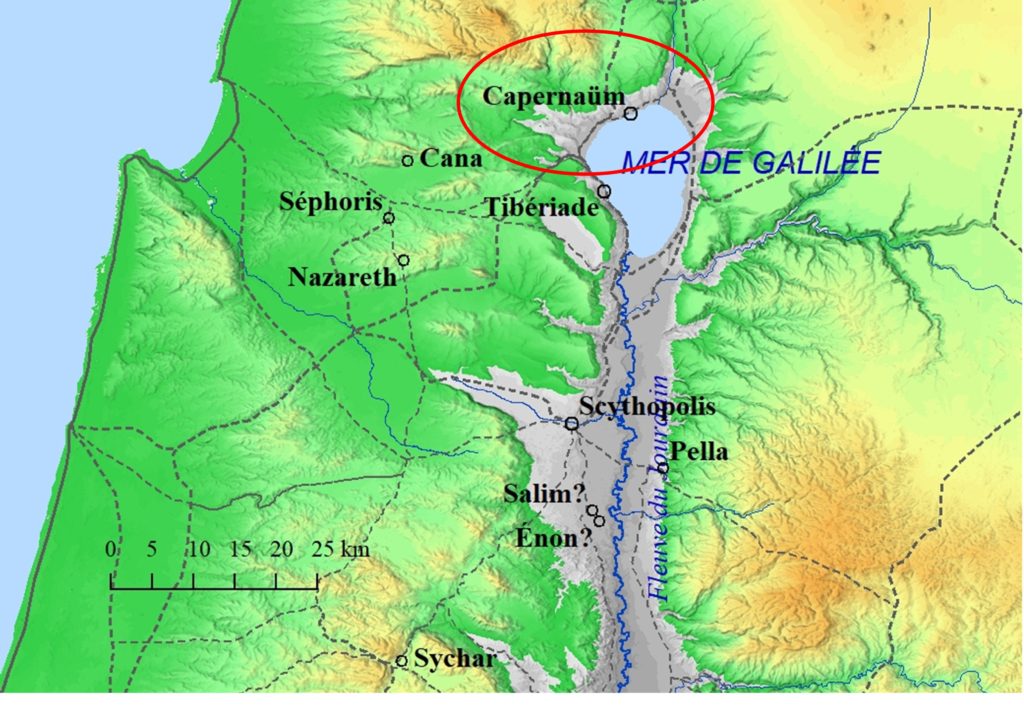
Location: On the plateau below a mountain near Capernaum in Galilee

Date: After the Passover pilgrimage to Jerusalem on April 5, AD 31

Method: We continue with Matthew

Note on the approach: Matthew provides the most information, while Luke summarises this discourse more concisely.

Capernaum

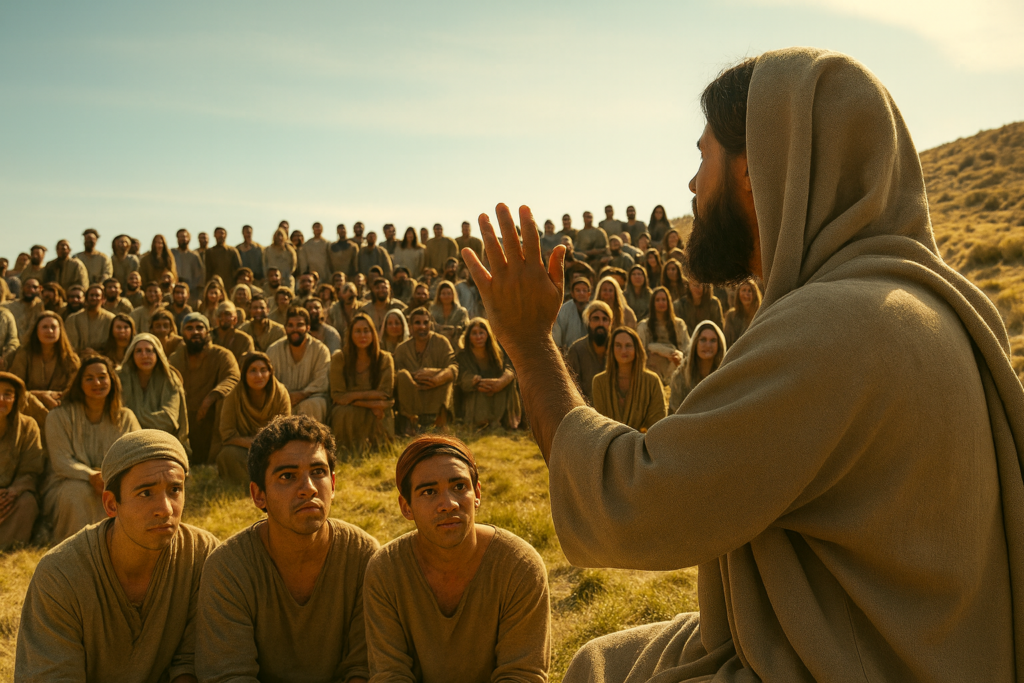
Jesus the Messiah criticises religious formalism and encourages disciples to pray in secret.

The Sermon on the Mount: instruction on prayer

Sermon

Commentary

We are examining the Sermon on the Mount, divided into 23 sections.

Matthew addresses prayer, unlike Luke, who does not mention it here, although Luke 11.1-4 repeats the words of Matthew 6.9-15. This suggests that Jesus reiterated this teaching several times. Prayer is intimate for the disciple, not a display of piety. Here, in the Sermon on the Mount, Matthew condemns religious formalism, emphasising that actions must be done for God rather than for people.

He then offers an example of prayer in response to the disciples' request (Luke 11.1). Do not confuse this example with the high-priestly prayer of John 17.1-26. In Matthew and Luke, this text seems intended as a model to follow in our own words rather than for systematic repetition. Moreover, Matthew and Luke use different terms. The first two requests of this prayer concern God's interests.

The first request, that God's name be hallowed, means that everyone should revere God.

The second, ‘your kingdom come’, asks for the establishment of the kingdom announced by John the Baptist, Jesus and his disciples, and implies people's conversion.

The third, ‘give us today our daily bread’, asks God to provide the food we need.

The fourth, forgiveness of sins, shows faith in God's authority to forgive.

The fifth, ‘lead us not into temptation’, asks for protection from situations likely to lead to sin, thus expressing the desire to live righteously.

Luke mentions these five points.