
PER032

The delegation from Jerusalem

The article explores John the Baptist's meeting with the Sanhedrin's representatives at Bethany, highlighting his renown and the authorities' messianic expectations. John is questioned about his messianic role despite performing no miracles, revealing the Pharisees' expectations of a royal and priestly messiah. The analysis reconciles differing Gospel accounts.

5 min John the Baptist delegation Jerusalem Messiah Gospel of John 3 verses 1 book

See also

Bible texts

Matthew
Matthew (King James Version) not mentioned in the book
Mark
Mark (King James Version) not mentioned in the book
Luke
Luke (King James Version) not mentioned in the book
John
John 1.19-28 (King James Version)

And this is the record of John, when the Jews sent priests and Levites from Jerusalem to ask him, Who art thou?

And he confessed, and denied not; but confessed, I am not the Christ.

And they asked him, What then? Art thou Elias? And he saith, I am not. Art thou that prophet? And he answered, No.

Then said they unto him, Who art thou? that we may give an answer to them that sent us. What sayest thou of thyself?

He said, I am the voice of one crying in the wilderness, Make straight the way of the Lord, as said the prophet Esaias.

And they which were sent were of the Pharisees.

And they asked him, and said unto him, Why baptizest thou then, if thou be not that Christ, nor Elias, neither that prophet?

John answered them, saying, I baptize with water: but there standeth one among you, whom ye know not;

He it is, who coming after me is preferred before me, whose shoe’s latchet I am not worthy to unloose.

These things were done in Bethabara beyond Jordan, where John was baptizing.

Technical details

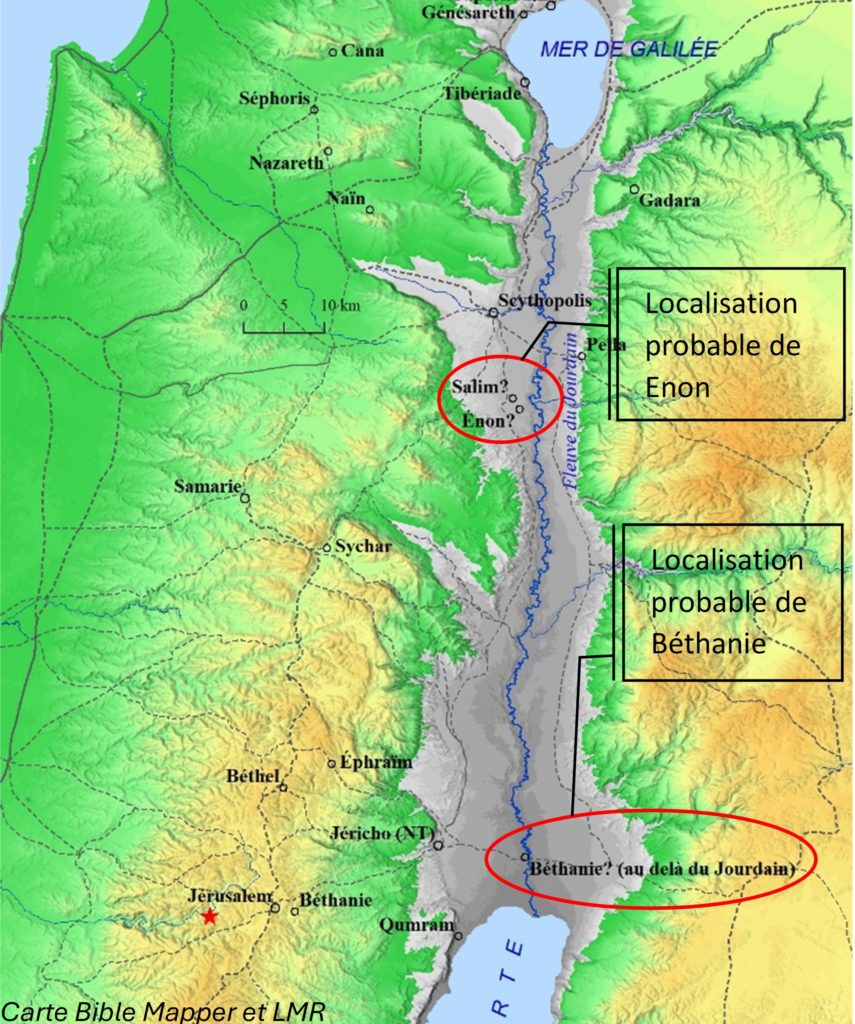
Location: Bethany beyond the Jordan, north of Jerusalem

Date: 3 October 29, the day before Jesus' baptism

Method: We switch to John

Note on the method: John alone recounts this episode

Pericope 30 map
Aenon and Bethany map

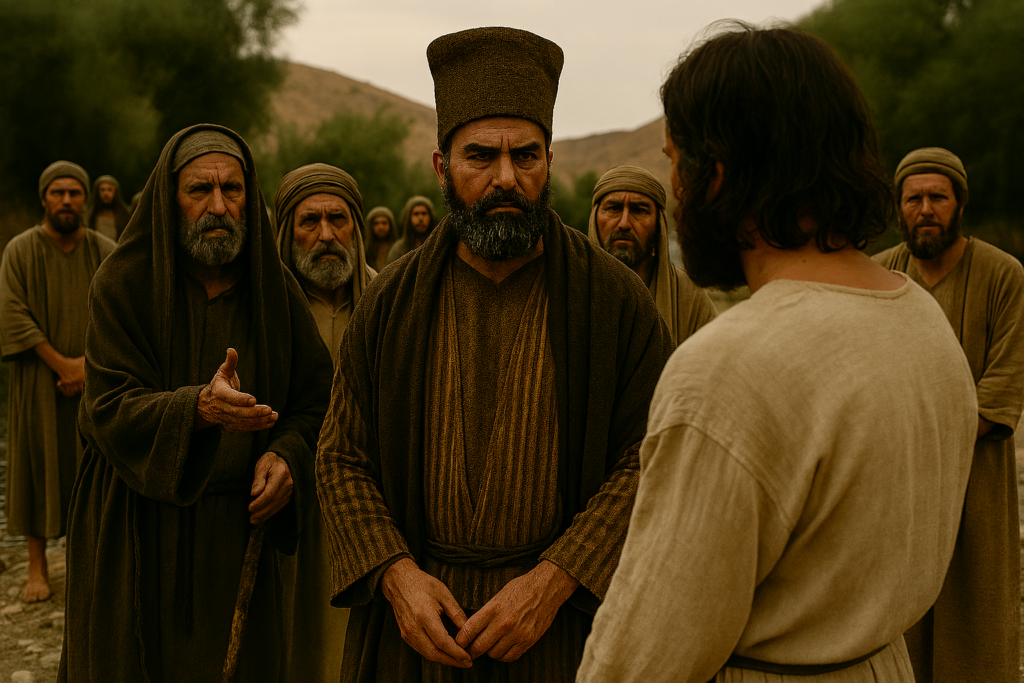
John the Baptist's renown intrigued the members of the . Several representatives were commissioned to investigate him. They would find him at Bethany.

The delegation comes to consult Jesus the Messiah

The delegation

Commentary

The three Synoptic Gospels describe the sequence as Jesus' baptism followed by a swift departure to Galilee, triggered by John the Baptist's arrest. The apostle John provides additional details which, at first glance, seem to contradict Matthew, Mark and Luke.

We examined the chronology of the Gospel according to John in the appendix ANN064: The next days noted by John, seeking a sequence consistent with the Synoptic information. This visit, reported only by John, highlights John the Baptist's renown and raises several points:

1- John the Baptist's reputation did not develop within a few months. Since he performed no miracle (John 10.41) to attract attention and preached rather directly, the three-and-a-half-year ministry proposed by Daniel fits the Gospel accounts well.

2- The religious leaders' first question concerns the Messiah, meaning the royal Messiah, followed by a connection with Elijah's coming. This indicates their knowledge of the prophecies.

3- The ' interest in John the Baptist's baptism suggests that they considered this practice to fall under the Messiah's or Elijah's authority.

4- John the Baptist's central message is the announcement of the royal Messiah's coming.

The Qumran writings reveal that Jews at the time awaited two messiahs: a royal messiah and a priestly messiah. The ' questions reflect this expectation, first evoking the royal Messiah, then the prophet or priestly Messiah.

John alone specifies where these events took place: Bethany beyond the Jordan (John 1.28), not to be confused with the village near Jerusalem where Lazarus and lived. Difficult to locate today, this place has prompted several geographical interpretations.

Notably, John sought to add details to events already mentioned in the Synoptics without anticipating the interpretative difficulties this might cause. He simply recounts personally experienced events, thus affirming that truth does not contradict itself.

These political leaders' journey suggests that John the Baptist no longer attended these Temple gatherings; otherwise, the religious authorities would have used his presence to question him. The festival of began only a few days later!