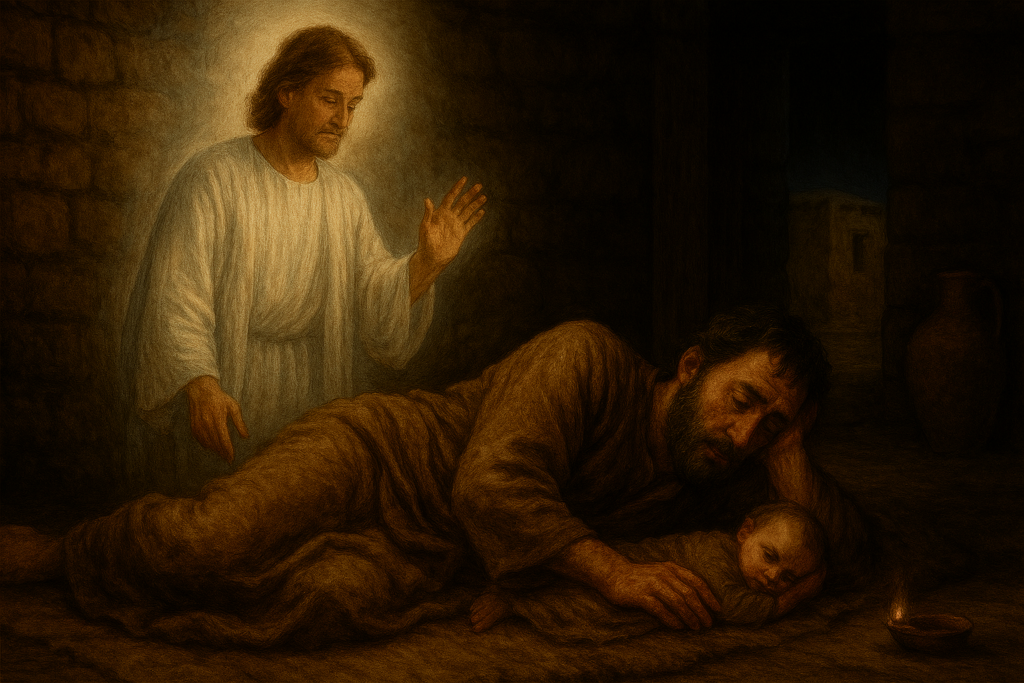
Joseph receives news of his country, particularly the province of Judea. He learns that Herod's son Archelaus has succeeded him. This political development does not reassure him, and he considers delaying his return. However, a fourth revelation leads him to change his plans.
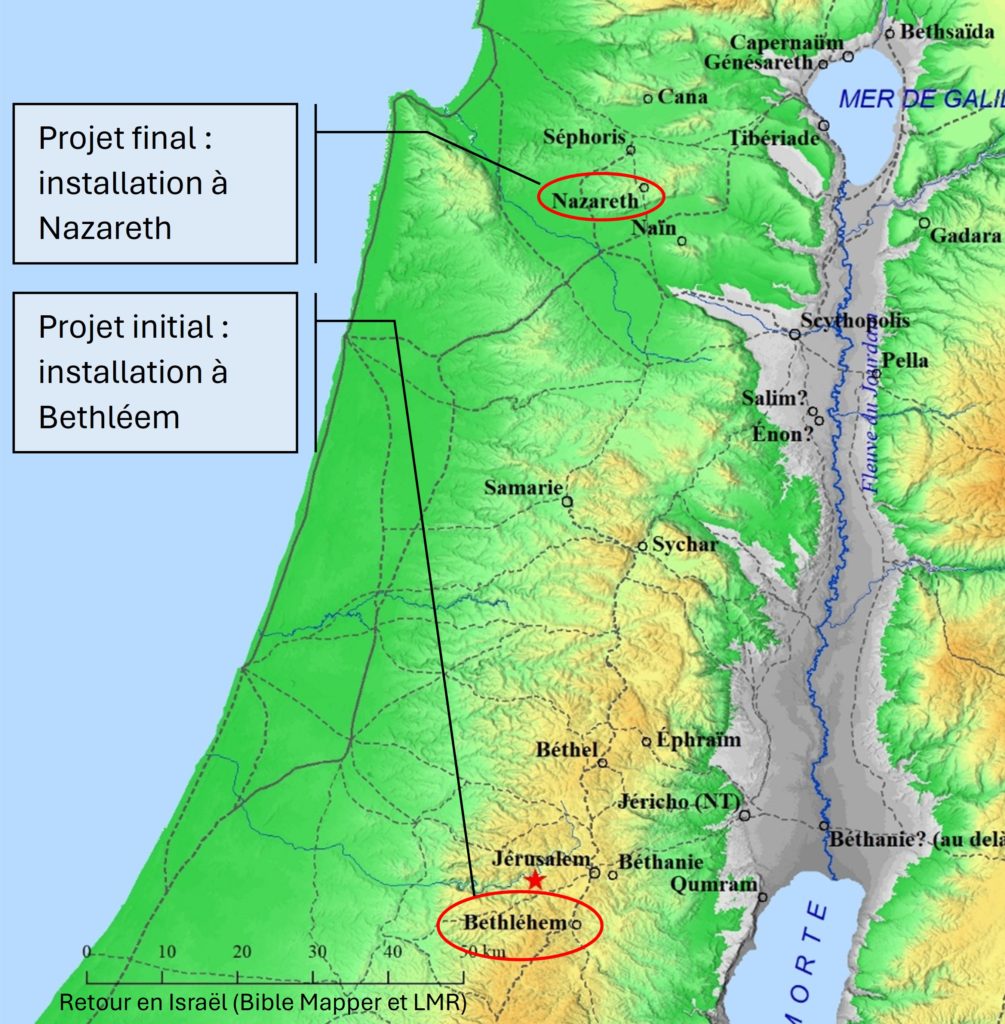
The angel warns him again in a dream not to go to the Bethlehem area, but instead to go to Galilee and settle in his home village.
The family had not originally planned to return there, but chooses to follow the angel's instructions. His advice had proved valuable before, so there was no reason to doubt him now.
The decision is made: they will return to Nazareth.
In this account, we see how Matthew builds his argument by emphasising that the Messiah will be called a ‘Nazarene’.
The texts provide no explicit quotation attributable to a particular prophet, which probably explains Matthew's plural, ‘the prophets’. Isaiah (11.1) uses expressions such as ‘roots’ and ‘shoot’, which might point to Nazareth. Indeed, the Hebrew word ‘neser’, translated as ‘shoot’, shares the same consonants as Nazarene.
Herod Antipas, another son of Herod, governed Galilee.