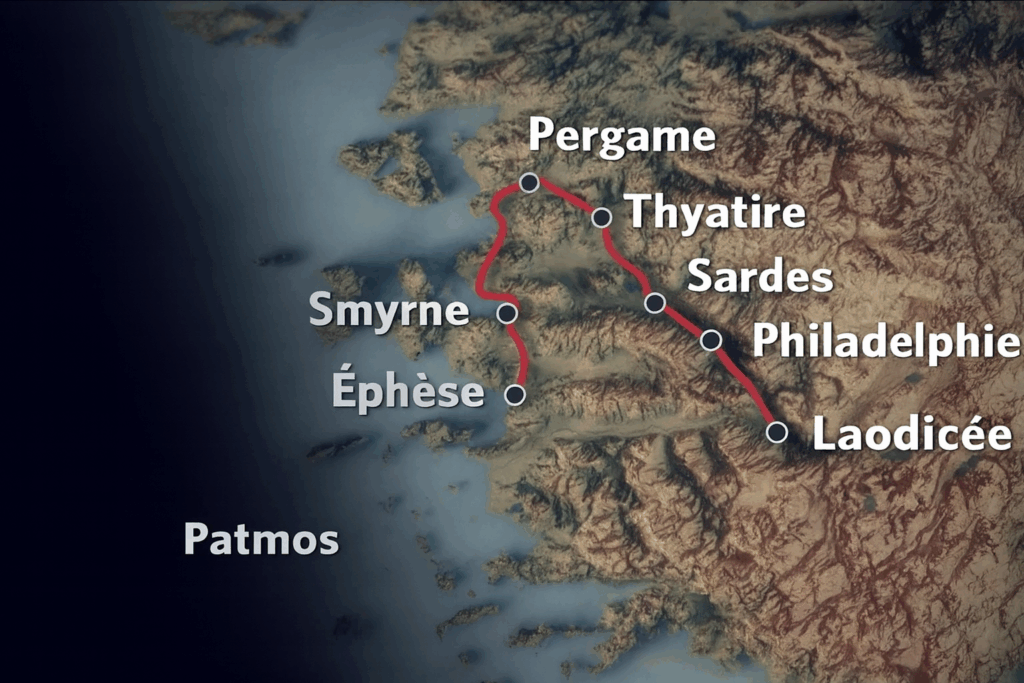
The link between the letter and the situation of Pergamum
Recognition of faithfulness : The letter commends Pergamum for holding fast in a hostile context, even after the execution of Antipas, a faithful member. This reflects reality: the community lived in a city where religious and political pressure was enormous.
An internal reproach : Despite its outward faithfulness, Pergamum tolerated within it influences that pushed toward compromise: participation in meals linked to idolatrous cults, behaviors judged destructive. In a city where everything invited one to blend into local practices, some believers yielded to the temptation to “do as everyone does”.
A call to react : The text asks the community to change its attitude and not to let these compromises settle in. The danger was not only outside oppression, but also inner weakening.
A fitting promise : The “hidden manna” and the “white stone with a new name” are powerful images for believers surrounded by cults and symbols. They say: true food and true identity come not from the temples or rituals of the city, but from a more intimate and lasting source.
The letter to Pergamum corresponds perfectly to its situation: a community living in a prestigious city but saturated with cults and social pressures. It is recognized for its faithfulness despite a hostile environment, but warned against internal compromises that could destroy it.
The message is therefore twofold: to stand firm against outside pressures and to refuse the influences that corrupt from within.
Summary of the paragraph:
Thyatira was a small industrial town where the economy depended heavily on guilds linked to pagan cults. Believers there were under strong pressure to take part in these rituals, on pain of social and professional exclusion.
The letter commends them for their love, their faith and their progress, but reproaches them for tolerating an internal influence, symbolized by “Jezebel”, which pushes toward compromise with local practices.
It warns that following this path would lead to destructive consequences, whereas those who remain faithful will have no additional burden.
The final promise assures true authority and a new hope (“the morning star”) to those who hold fast.
In short, the letter perfectly reflects the situation of Thyatira: a growing community, but threatened by the temptation to adapt in order to survive, and called to remain authentic despite the pressures.
Full text:
Context of Thyatira
A small industrial town : Thyatira was less prestigious than Pergamum or Ephesus. It was known above all for its workshops and its corporations (the “guilds”), notably in textiles and dyeing (the famous purple).
An economic life tied to cults : Craftsmen and merchants often had to take part in banquets and ceremonies in honor of the protective deities of their trade. Refusing these practices meant risking economic and social exclusion.
A community under tension : The believers of Thyatira were caught between two choices: to remain faithful to their commitment, or to yield to the pressures in order to “integrate” into local practices. This explains why the letter insists on internal compromises and on the tolerance of influences that blurred landmarks.
The letter to Thyatira (Revelation 2.18-29
Content of the letter
Introduction : The speaker is described with “eyes like a flame” and “feet of burnished bronze”. These are images meaning: a gaze that sees through appearances and a solid, unshakable presence.
Recognition : The community is commended for its love, its trust, its service and its perseverance. Better still: its latter works are more numerous than its first. In other words, it is progressing, it is growing, it is not running out of breath.
A reproach : The problem is that it tolerates a negative influence, symbolized by a figure called “Jezebel”. This person encouraged taking part in local practices (banquets linked to cults, behaviors judged immoral). The danger was not only external, but internal: allowing a voice that pushes toward compromise to develop.
A warning : The text announces that those who follow this influence will bear the consequences of their choices. The idea is clear: what seems seductive or advantageous in the short term can become destructive in the long term.
An encouragement to the faithful : Those who have not followed these teachings are reassured: they will have no additional burden. The instruction is simple: hold fast to what you have until I come.
A promise : To those who hold fast, a solid authority (“a rod of iron”) and a new light (“the morning star”) are promised. These images say: you will have a just influence and a hope that announces a new day.
The letter to Thyatira corresponds perfectly to its situation: a small town where the economy and social life were tied to local cults. Believers were tempted to yield so as not to be excluded. The message acknowledges their growth and their love, but warns them against tolerating influences that push them toward compromise. The final promise underlines that true authority and true light come not from the guilds or the cults of the city, but from a more solid and lasting source.
In summary : Thyatira is a growing community, but threatened by the temptation to adapt to local practices in order to survive. The message encourages it to keep its authenticity and promises a just influence and a new hope to those who hold fast.
The link between the letter and the situation of Thyatira
Recognition of growth : The letter commends Thyatira for its love, its trust, its service and its perseverance. It underlines that its latter works are more numerous than the first. This corresponds to a living community, which progresses despite a difficult environment.
A targeted reproach : The text denounces the tolerance of an internal influence (“Jezebel”), which encouraged taking part in the practices of the guilds (banquets linked to cults, behaviors judged immoral). In a city where the economy depended on these rituals, some believers yielded to the temptation of compromise.
A fitting warning : The message announces that those who follow this influence will bear the consequences of their choices. This reflects reality: yielding to local pressures could seem advantageous in the short term, but destroyed the integrity of the community.
An encouragement to the faithful : Those who have not followed these teachings are reassured: they will have no additional burden. The instruction is simple: hold fast to what you have. This corresponds to those who were already resisting the pressures of the guilds.
A strong promise : Authority over the nations and the “morning star” are images of recognition and hope. They say: true influence and true light come not from the corporations or the cults of the city, but from a more solid and lasting source.
The letter to Thyatira directly reflects its situation : a small town where economic and social life was tied to local cults. The community was growing, but threatened by the temptation of compromise in order to survive. The message acknowledges its progress, warns against the tolerance of destructive influences and promises true authority and a new hope to those who hold fast.
Summary of the paragraph:
Chapter 2 presents four letters addressed to the Churches of Ephesus, Smyrna, Pergamum and Thyatira. All follow the same structure, introduction, recognition, reproach or encouragement, call, promise, but each answers the particular situation of the community.
Ephesus is commended for its perseverance but called to rediscover its “first love”. Smyrna, poor and persecuted, receives an encouragement without reproach and a promise of life. Pergamum is recognized for its faithfulness but warned against internal compromises. Thyatira progresses in love and service, but tolerates an influence that pushes toward compromise.
The chapter highlights a God who is close, who knows the communities, values their strengths, names their drifts and calls them to hold fast, to remember, to change or to resist. The promises, tree of life, crown of life, new identity, inner food, morning light, remind us that listening and faithfulness open onto a deep and lasting life.
Full text:
Chapter 2 gathers the first four letters addressed to the Churches of Asia Minor: Ephesus, Smyrna, Pergamum and Thyatira. Each follows a similar structure: introduction of the one who speaks, recognition of qualities, reproach or encouragement, call to change or to hold fast, and final promise. But each letter is adapted to the particular context of the community.
city of Ephesus Revelation 2.1-7
Context : a great prosperous city, a commercial and religious center, with the temple of Artemis.
Strengths acknowledged : work, perseverance, vigilance against false guides.
Reproach : loss of the “first love”, that is, the warmth and passion of the beginnings.
Call : remember, change one’s attitude, return to the simple deeds that expressed love.
Promise : access to the tree of life, a symbol of a life nourished at the source and lasting.
Smyrna (Revelation 2.8-11)
Context : a city rich and loyal to the imperial cult, but a poor and persecuted Christian community.
Strengths acknowledged : inner richness despite material poverty, faithfulness in trial.
Reproach : no direct reproach, only encouragement.
Call : do not fear suffering, remain faithful even in the face of death.
Promise : the “crown of life” and victory over the “second death”, an image of a life that goes beyond physical death.
Pergamum (Revelation 2.12-17)
Context : regional capital, intellectual and religious center, saturated with cults (Zeus, Asclepius, the imperial cult).
Strengths acknowledged : faithfulness in the midst of a hostile environment, even after the execution of Antipas.
Reproach : tolerance of internal compromises (participation in idolatrous cults, destructive behaviors).
Call : change one’s attitude, refuse these influences.
Promise : the hidden manna (inner food) and a white stone with a new name (personal and renewed identity).
Thyatira ( Revelation 2.18-29)
Context : small industrial town, known for its corporations and its dyeing workshops. Believers were tempted to take part in the banquets linked to the cults in order to keep their place in society.
Strengths acknowledged : love, trust, service, perseverance, and progress (the latter works more numerous than the first).
Reproach : tolerance of a negative influence (“Jezebel”), which encouraged compromise with local practices.
Call : do not let these influences develop, hold fast to what has already been gained.
Promise : solid authority (“rod of iron”) and new light (“morning star”), symbols of a just influence and a renewed hope.
General conclusion of the chapter
A close and sovereign author : the one who speaks presents himself each time as the one who knows the communities, walks in their midst and sees beyond appearances.
Strengths acknowledged : work, endurance, faithfulness, growing love. The text honors the good before correcting.
Drifts named : loss of inner impulse (Ephesus), suffering but faithfulness (Smyrna), internal compromises (Pergamum), tolerance of destructive influences (Thyatira).
Clear calls : remember, change one’s attitude, hold on in trial, refuse compromises, protect the community.
Strong promises : life nourished at the source (tree of life), victory over death (crown of life), renewed identity (new name), inner food (hidden manna), personal recognition (white stone), just authority and new light (morning star).
Key word : listen. “He who has an ear, let him hear what the Spirit says to the Churches” recurs in every letter. Listening is the condition for understanding, changing and receiving the promise.
In short, chapter 2 of Revelation is a mirror: it shows real communities with their strengths and weaknesses, and it offers calls and promises that remain relevant today. It reminds us that faithfulness is not only endurance or rigor, but also warmth, discernment and the refusal of compromise.