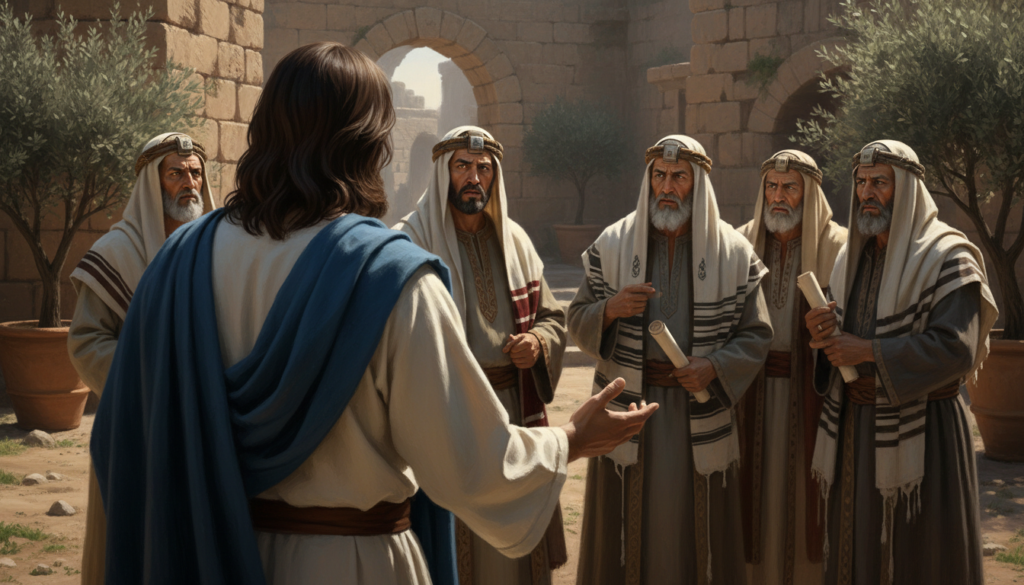

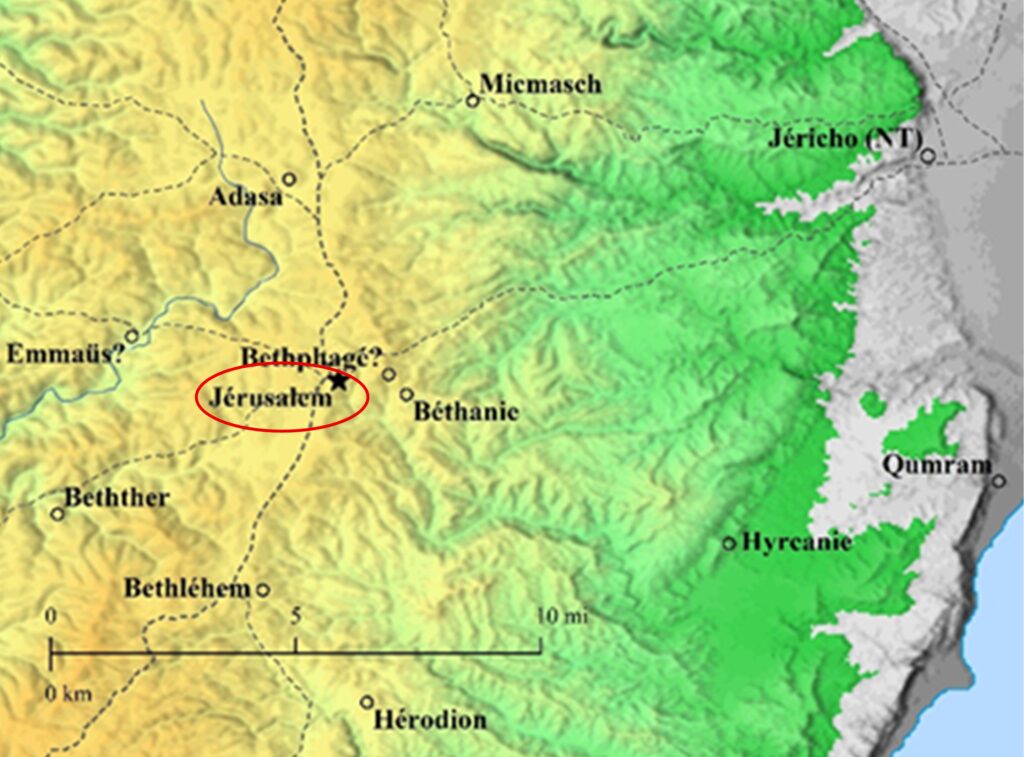

Every day, the Messiah Jesus, accompanied by his disciples, went to the Temple of Jerusalem. This place, consecrated to prayer, had nevertheless become a true battlefield of spiritual conflict. The religious men of the day, unbelieving and jealous of his influence, sought only one thing: to catch him at fault, to trap him by his words in order to discredit his authority among the people.
On this day, his authority is openly called into question. But with unequaled wisdom, the Master exposes their contradictions and turns their accusations back upon them. No wonder, then, that the Temple guards could cry out:
His word resounded with a power and a purity that surpassed all human speech.
Sadly, these religious men were not seeking the truth. Their only intention was to preserve their position, their power and the privileges that religion conferred on them. By recalling the example of John the Baptist, Jesus reminds them that their heart is closed: they rejected the prophet who came to prepare the way, just as they now reject the Messiah himself.
Revealingly, they do not dwell on the facts themselves, the cleansing of the Temple and the driving out of the merchants, but on Jesus’ authority to act in this way. Deep down, they knew full well that by tolerating these transactions in the house of God they had gravely abused it. The Temple, once a place of prayer, had become a business center where money flowed freely. Finances were flourishing; conscience, by contrast, had fallen asleep. But they would never have admitted it, for fear of seeing their religious system exposed by the truth embodied in Jesus, the Holy and Righteous One.