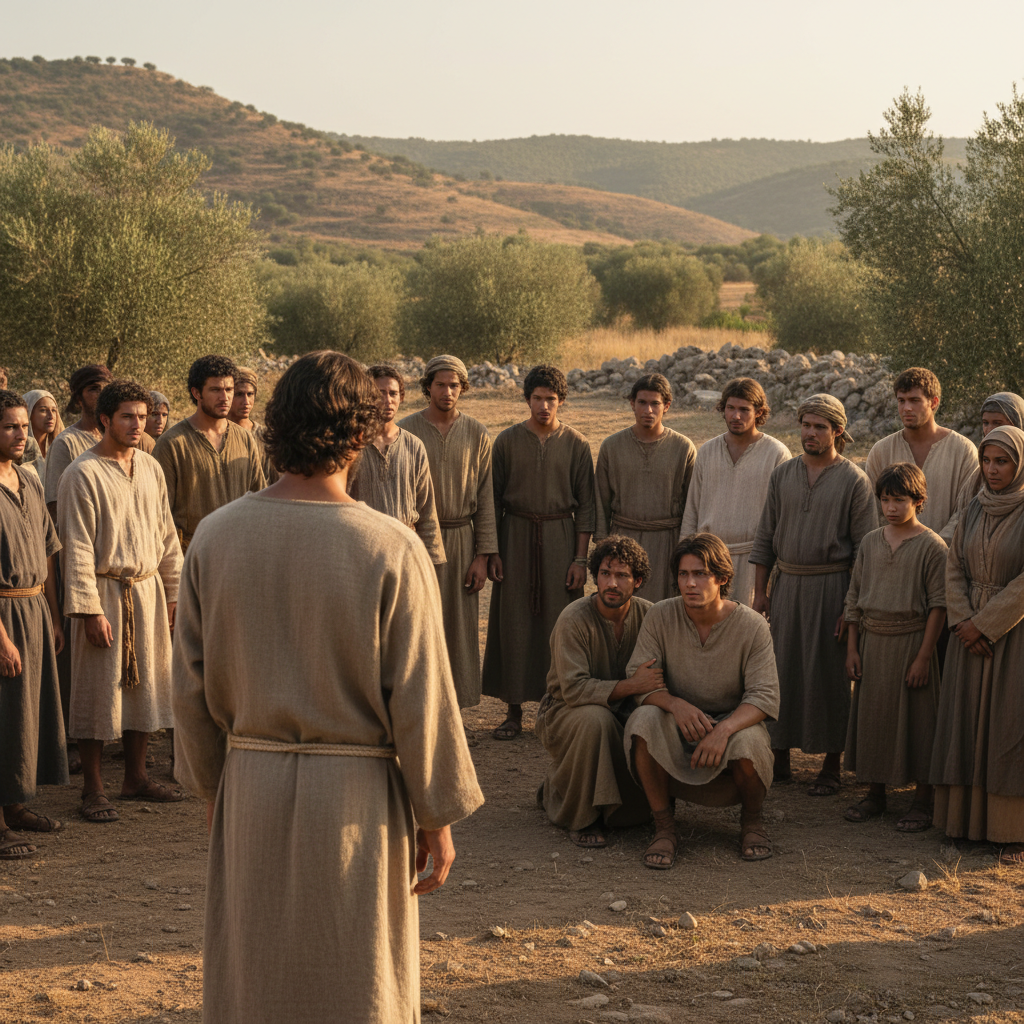

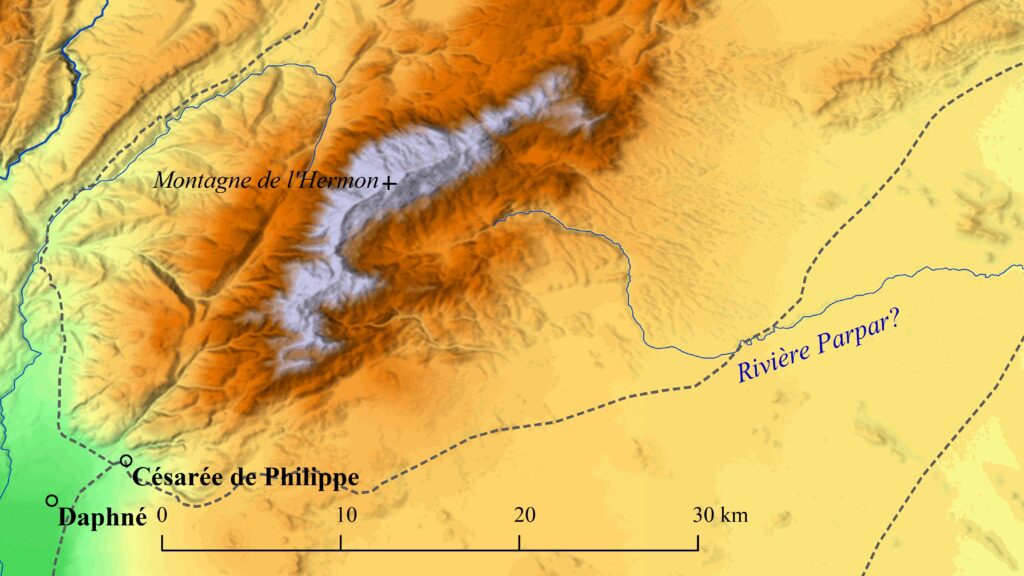
According to Mark 9.28, the Messiah Jesus and his apostles were lodged in a house in Caesarea Philippi. It is not specified whether they were renting this lodging. Temperatures in October begin to become cool, especially at night. They therefore stayed for some time in the region of Caesarea Philippi.
The verses of Matthew 17.17, Mark 9.19 and Luke 9.41 have allowed us to understand that the apostles’ unbelief was the main reason for their failure. However, the Messiah Jesus will give them an additional piece of information.
According to the words of the Messiah Jesus, certain demons can be driven out only by prayer and fasting. The apostles were therefore not prepared to deal with this situation. The main reason for their failure was attributed to their lack of faith and spiritual discernment.
It should be noted that the Master’s remarks were particularly severe because of the many experiences and practices the disciples had already acquired, which should have enabled them to overcome this trial successfully. The disciples, confident in their ability to succeed as in previous attempts (Luke 10.17), now realize that the situation is more complex than they had imagined.
Matthew emphasizes faith and again uses the of the mustard seed, already mentioned in Matthew 13.31-32 and taken up by Luke 17.6 and Luke 13.19.
Here is a comparison of the passages of Matthew 17.19-21 and Mark 9.28-29, which both deal with the disciples’ inability to drive out a demon and the explanation given by the Messiah Jesus.
Summary of the passages
- Matthew 17.19-21: After the disciples’ failure to expel a demon, they question the Messiah Jesus privately about the reason for their inability. He answers that it is because of their lack of faith, and he stresses the power of faith, stating that even a tiny faith, like a mustard seed, would be able to move mountains. He adds that certain demons can be driven out only by prayer and fasting.
- Mark 9.28-29: This passage is similar, but it places more emphasis on the necessity of prayer to expel certain spirits. After the disciples’ failure, the Messiah Jesus explains to them that this kind of demon can come out only by prayer.
Comparison of the two texts
Theology of faith and prayer
Matthew insists on the power of faith, using the image of the mustard seed to illustrate the idea that even the smallest faith can accomplish miracles.
Mark, on the other hand, emphasizes prayer as a necessary means of overcoming certain spiritual forces.
Textual differences
Verse Matthew 17.21 (which mentions fasting) is absent from some ancient manuscripts, which has led some scholars to consider that it may be a later addition.
Mark is more concise and focuses on the practical aspect of prayer, without explicitly mentioning faith.
The disciples’ perspective
In Matthew, the disciples’ failure is attributed to their lack of faith, which places them in a posture of spiritual learning.
In Mark, the emphasis is placed on the necessity of prayer, which suggests a more pragmatic approach to spiritual warfare.
These differences show how each evangelist highlights a particular aspect of the teaching of the Messiah Jesus: Matthew insists on faith as the driving force of the miracle, whereas Mark underlines prayer as an essential condition for exorcism.