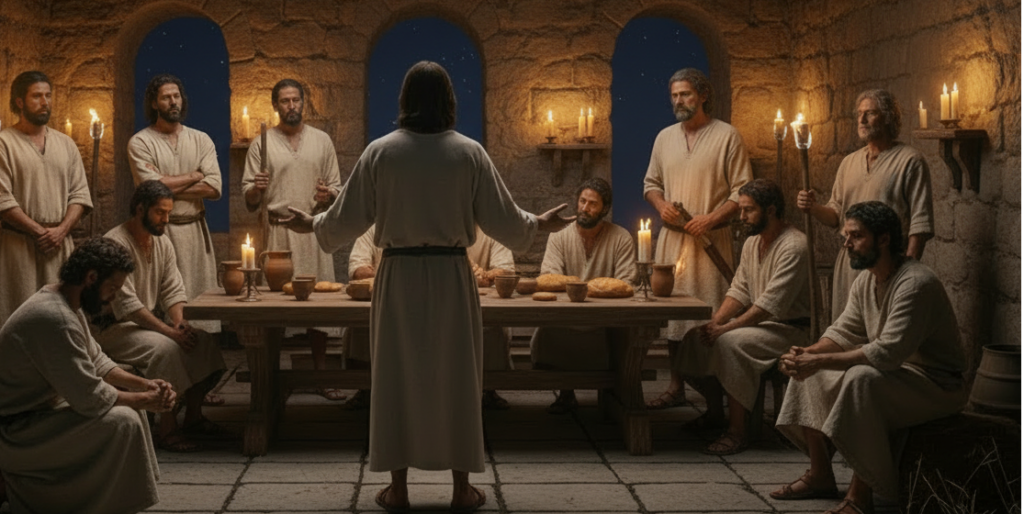

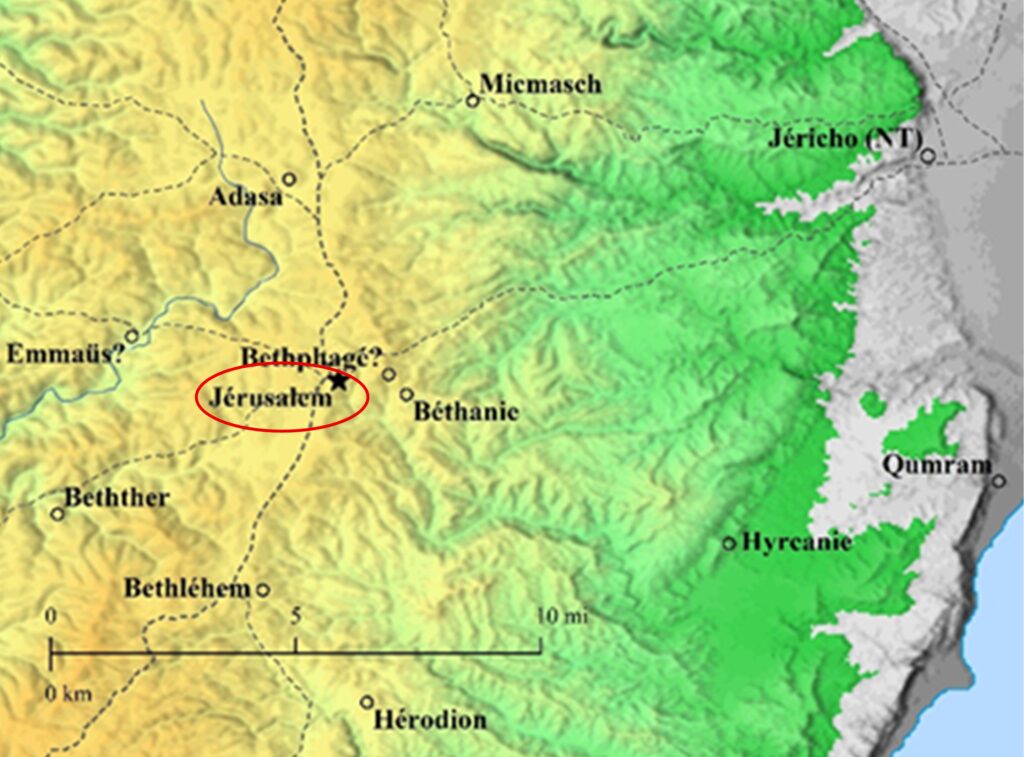

_3 The house is, in our view, that of Mary, the mother of John, who was surnamed Mark. Acts 12.12.
_4 The Passover meal begins on Thursday evening, after 6 p.m. It is already Friday for the Jews (Mark 14.17, Matthew 26.20, Luke 22.14-18). This is therefore not the official Seder, which will take place on the evening of Friday John 18.28.
_5 The meal ends on Friday morning before dawn, between midnight and 2:30 a.m.
_6 Judas Iscariot left before the end of this meal. John 13.30.
You can consult the complete chronology in the study ANN026 : The Hour of the Crucifixion.
Commentary:
Here we have the words of a prayer of Jesus the Messiah addressed to his Father, and John was a direct witness to it (John 17.1). The scene most likely still takes place in Mary’s house, which means that before leaving this house the Master prayed to his Father aloud in front of his disciples.
This intimacy is not usual, for Jesus the Messiah generally withdrew to be alone to pray to his Father (Mark 1.35), but here he wants his disciples to hear and understand what is at stake. Jesus the Messiah is fully aware of the events that are about to happen; he knows the Father’s will and declares: “the hour has come,” showing that his course of action is part of the divine plan established long ago (John 12.23).
Nothing is accidental; everything is planned and orchestrated according to the Father’s will. Jesus the Messiah gives before God an account of his work and affirms that he has accomplished the mission entrusted to him (John 17.4); he must now bring it to its end by the offering of his life.
The key to understanding these last words lies in the story that is about to unfold before the disciples’ eyes, for what they are about to live through will allow them to remember and understand that their Master knew everything in advance and that nothing escaped him (John 13.19).
Thus, this prayer becomes for them a precious testimony, shedding light on the events of the passion and confirming the perfect unity between the Son and the Father.